


Products rarely fail because anyone broke the rules; they fail because the environment spent three years doing what the requirement set never mentioned â salt air, factory dust, standing water, UV through a window, a cleaning chemical used off-label. Degradation is a spec subject, not a warranty subject. This guide shows badminton rackets purchasers which ageing questions to request before selection rather than after the first rusty complaint.
A certificate copy describes a moment under controlled conditions; a service life describes years under none. The engineering between those two statements is degradation, and it can be specified like anything else.
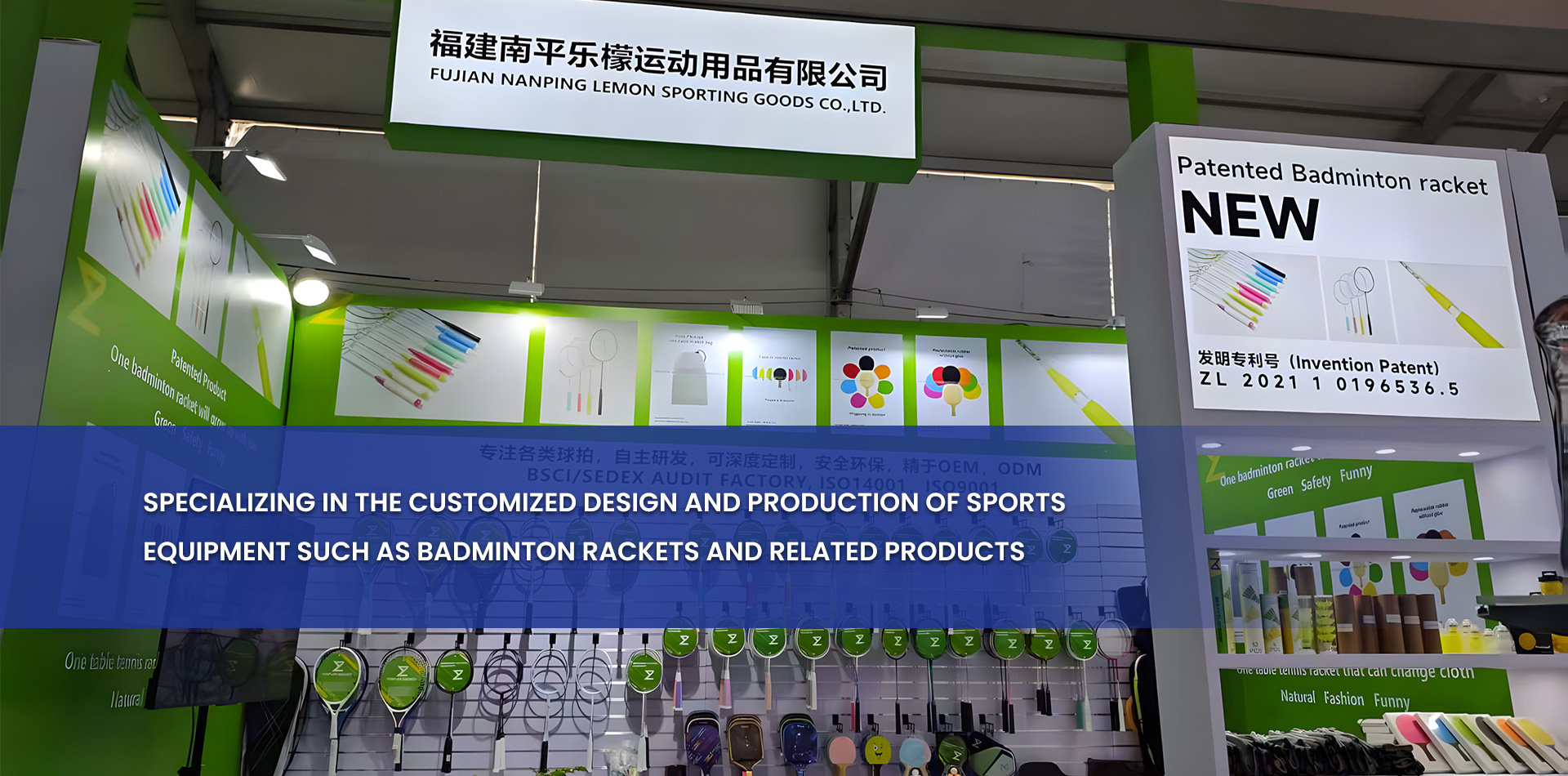
This guide explains how badminton and racket sports equipment is tested, which standards apply, what certification actually proves, and how purchasers can verify conformance before, during and after fabrication. It reflects the practices at æå·ä¹æª¬è¿åºå£æéå ¬å¸ (www.factoryracket.com).
Vendors make broad conformance claims. These are the specific questions that turn a claim into evidence.
Which standard, exactly? Insist on seeing the standard number, not a general assurance.
Who issued the attestation? Recognised third-party bodies carry more weight than self-declarations.
What is the scope? A certificate copy may cover only part of the product range.
Is it current? Verify validity dates and renewal status.
What is the incoming verification protocol? Request the checklist and sampling plan.
What happens when a fault is found? A defined corrective workflow matters more than a zero-fault promise.
A conformance management system (QMS) is the documented set of procedures that control how a product is made, inspected and released. Certification such as ISO 9001 confirms that the system exists and is audited; it does not by itself guarantee product conformance, but it makes consistency repeatable.
Incoming raw stock control: verifying raw stocks against spec before use.
In-workflow control: validating parameters and dimensions during manufacturing.
Final examination: verifying finished goods before packing.
Corrective action: investigating and fixing root causes of faults.
Importers should treat a QMS as a foundation. On its own it is necessary but not sufficient; it must be paired with genuine product validation.
Different products require different tests, but the categories are consistent across manufacturing:
| Test Category | What It Verifies | Typical Method |
|---|---|---|
| Dimensional | Size and dimensional allowance | Caliper, gauge, CMM |
| Functional | Performance under load | Bench and endurance validation |
| Raw stock | Composition and grade | Spectrometry, attestation go through |
| Safety | Conformity with standards | Type verification testing, Hipot, pressure test |
| Environmental | Resistance to conditions | Humidity, temperature, salt spray |
Require which of these are performed routinely and which only on request. A production facility that tests every batch is fundamentally different from one that tests only the first sample.
Certification confirms that a product or procedure has been assessed against a standard by an accredited body. It is a valuable signal, but it is not a guarantee of every unit.
Proves: the tested sample complied with the standard at the time of test regime.
Does not prove: that every fabrication unit complies, or that the manufacturing site maintains the same method over time.
Best practice: combine certification with routine batch validation and periodic re-verification.
For badminton and racket sports equipment, the relevant certifications typically include BWF approval, ISO 9001:2015, CE. Establish the scope of each attestation covers the exact product you are buying.
A simple incoming verification protocol is the purchaser's last line of defence. It is inexpensive and catches the majority of difficulties before they reach customers.
Sample the dispatch according to a defined plan (for example, per pallet or per batch).
Measure the key technical brief parameters and record the results.
Functionally test a representative subset.
Verify labelling, packaging and paperwork against the approved artwork.
Record results by batch number and raise trends with the provider.
Reject or negotiate remedies for any lot that fails the criteria.
Keep the data. A purchaser who can show three months of measured results has far more leverage in a workmanship conversation than one who reports only that a batch felt wrong.
Understanding why consistency varies helps importers request better questions.
Raw base material substitution: lower-grade input material used to bring down expense.
Tool wear: moulds and dies degrade and produce out-of-dimensional allowance parts over time.
Workflow drift: settings change without written evidence.
Operator variation: manual steps introduce inconsistency.
Sub-maker workmanship: components from third parties may not meet the same standard.
A factory that monitors these factors proactively prevents most nonconformities before they occur.

Put workmanship terms in the terms sheet, not just in conversation. Specify the standard, the sampling plan, the acceptance criteria, the remedy for non-conformance, and the documentation you expect with each shipment.
This protects both sides. The source knows exactly what is expected, and you have a defined basis for discussion if something goes wrong.
Recurring conformance management means tracking a small set of metrics rather than reacting to individual complaints.
| Metric | What It Measures | Target | Action If Breached |
|---|---|---|---|
| Reject rate | Share of units failing checking regime | < 1% | Investigate root cause with provider |
| On-time fulfilment | Consignments meeting the agreed date | > 95% | Review output and planning |
| First-pass yield | Units passing without rework | > 98% | Analyse workflow weak points |
| Warranty claim rate | Field failures under warranty | < 2% | Reassess design and validation |
| Written evidence accuracy | Correctness of shipping paperwork | 100% | Tighten release checklist |
Track these monthly and go through them with the provider quarterly. A small set of well-understood metrics beats a large set of ignored reports.
The applicable standards depend on your destination market and product category. These are the ones most commonly requested.
BWF Laws of Badminton: verify the fabrication site can supply the current certification record and that its scope covers your product.
ISO 9001: verify the production site can supply the current certification record and that its scope covers your product.
CE: verify the manufacturing site can supply the current attestation and that its scope covers your product.
REACH: verify the production facility can supply the current certificate copy and that its scope covers your product.
BWF approval: request the attestation and verify validity.
ISO 9001:2015: request the certification record and verify validity.
CE: request the attestation and make certain validity.
This is the workflow that turns a consistency policy into shipped consistency.
Approve the technical brief and the golden sample in writing.
Verify incoming input materials against certification records.
Control in-procedure parameters and record them.
Run functional and safety tests at defined intervals.
Perform 100% or AQL final verification before packing.
Complete a pre-dispatch checking regime with photographic records.
Archive the batch paperwork for traceability.
Feed field performance back into design and procedure improvement.

The lines most often missing from a requirement set, with the question that sizes each:
| Missing Line | What It Should Say | How to Size It |
|---|---|---|
| Degradation environment | Corrosion class, UV exposure, chemical contacts, temperature extremes | Describe the actual installation, then enquire about which standard test maps to it â a coastal yard and an indoor production facility are different products |
| Test duration, not just pass mark | Hours of salt spray or UV ageing tied to an expected service year | Require the supplier to state the hours behind the attestation; an unnumbered pass is a brochure |
| Cleanliness class | Maximum debris, particle size or residue permitted at packing | Derive from the most sensitive thing the product touches, not from the manufacturing site's habit |
| Packing cleanliness | Bag, desiccant, VCI or sealed packing for the worst leg of transport | Enquire about which destination climate the packing was designed for â it is usually the fabrication site's |
| Method windows | Cure schedule, drying time, cool-down, any step with a temperature and a duration | Require which steps are time-critical and what happens when they are shortened â a supplier who knows will answer in numbers |
None of these lines is exotic, and that is precisely the point: they are absent because technical brief templates are inherited, not because the subjects are difficult. A importer who adds them discovers two things quickly. First, most sources can meet reasonable degradation and cleanliness mandates without a quoted price penalty, because the controls already exist â the spec simply was never written, so the evidence was never generated. Second, the occasional supplier who resists a numbered line is usually the one whose process cannot hold it, which is exactly the discovery the specification was designed to produce. The whole exercise costs one page, and it moves failures from the field back into the factory, where they cost a fraction as much and are nobody's emergency for badminton rackets shipments.
A certification record confirms regulatory fit with a standard following assessment by an accredited body. A test report records the results of specific tests. Both are useful; the certificate copy is a higher-level signal, while the report gives detail.
ISO 9001 confirms that a documented conformance management system is in place and audited. It makes consistency repeatable but does not by itself guarantee a specific product's performance. Combine it with product verification testing.
Most importers re-review annually, or more often if the source is new, critical, or has had recent workmanship issues. Periodic third-party verification testing complements internal audits.
Documented item the failure with evidence, notify the maker formally, and agree a remedy â rework, replacement, credit or return. Track the resolution to verify the root cause is fixed.
Yes, and it is good practice. Many procurement teams appoint a third-party checking regime company to verify goods before they leave the manufacturing site.
It depends on the market: CE for the EU, UL or ETL for North America, and specific standards for food, medical or electrical applications. Make certain of the spec for your destination before ordering.
Verify the issuing body's database, verify the certification record number, scope and validity, and secure the product in question is covered.
Broadly, yes â but not perfectly. A structured examination and batch test regime reveal real consistency differences that commercial terms alone cannot.
Standard enquiries produce standard answers, and standard answers hide capability. The request that falls outside the catalogue is the cheapest test of a source there is, because it cannot be rehearsed:
The catalogue-plus-one request: take a standard product and change one parameter â a length, a voltage, a base material grade, a packing format â and watch what comes back. A production facility that answers with a drawing and a commercial terms within days has a workflow behind the catalogue; one that answers with silence has a quoted price list.
The honest-impossible request: insist on seeing something the supplier probably cannot do, and read the answer. 'No, but here is the nearest we can get and here is who can' is a mark of an organisation that knows its own limits â which is the organisation you want holding a schedule.
The documentation request: request a record the sale does not require â a base material trace, a maintenance manual, a dimensional report from a past commitment. Willingness to produce paperwork nobody is buying is a proxy for how the production facility runs when nobody is watching.
The timing request: enquire about what would have to be true to deliver two weeks earlier than quoted. A useful answer names an expenditure and a constraint; a useless one names a discount on urgency nobody examined.
The complaint test, in miniature: raise a small hypothetical difficulty â 'what if this arrives scratched?' â and listen for a procedure rather than a promise. Reassurances are free; a named verification point, a replacement policy and a contact are not.
The reason this works is asymmetry of preparation: everything in a quote can be polished, but an exception arrives raw, and raw answers show the machinery behind the sales surface. Importers who keep one exception request in every qualification round report that the pattern holds remarkably well â sources who handle the exception well also handle the ordinary commitment well, and sources who dodge it also become difficult about exactly the things that were never in the unit price list. The test outlays nothing and can be run on any badminton rackets enquiry, including the one currently on your desk.

Every environment maps to a test; the mapping is the whole skill:
| Real Condition | Standard Test Family | What the Hours or Cycles Mean |
|---|---|---|
| Coastal or de-icing salt exposure | Neutral salt spray, cyclic corrosion tests | Hours to first corrosion mapped against years to first maintenance in comparable installations |
| Outdoor sunlight | UV weathering with condensation cycles (xenon or fluorescent) | Radiant dose correlated with colour shift, chalking and embrittlement in the actual polymer or coating |
| Industrial atmosphere | Mixed-gas exposure tests | Severity class matched to the pollutants actually present, not to a generic 'industrial' label |
| Wash-down or immersion | Water jet and immersion tests at stated pressure and temperature | The exact chemistry of the cleaning regime â a test in water proves little about a chlorinated degreaser |
| Freeze-thaw and condensation cycling | Cyclic climate tests | The number of transitions, which is what cracks coatings, not the steady extremes |
The map's workable use is in the question it lets a purchaser request: not 'is it corrosion resistant?' but 'which test, at how many hours, represents our yard in winter?' â a question a competent provider answers with a standard number and a slightly embarrassed note that nobody had asked so precisely before. Insist on the note as well as the number: the correlation between accelerated tests and service life is engineering judgement, and a supplier who says so is more credible than one who converts salt-spray hours directly into warranty years. What the customer needs is not immortality but a ranked comparison: product A carried more hours in the relevant test than product B, at a quoted price difference the failure consequence can justify or reject for badminton rackets duty.
Walk the commitment backwards and the entry points are consistent across most manufacturing sites:
Incoming base material: mill scale, drawing compound, pallet debris and dust arrive with raw stock and ride along unless there is a wash, wipe or rejection step â require where it is.
Machining and assembly: swarf, chips and cutting fluid are generated by the method itself; the question is whether cleaning is a station with a standard or an afterthought with a rag.
Internal transport and storage: unfinished goods parked in open areas collect what the building sheds â overhead dust, forklift exhaust, condensation on cold mornings.
Packing: the last hands on the product decide what travels; clean gloves, sealed bags, desiccant and a closed box are cheap and rare in exactly that combination.
The records: a cleanliness condition that exists only in the purchaser's head cannot be inspected, claimed on or improved â write the class, the method and the point of validate into the technical brief and the purchase commitment.
Contamination failures are unusually expensive because they are misattributed: debris in a valve reads as a valve reject, dust in an enclosure reads as an electronics fault, and the corrective action chases the wrong machine. The examination above outlays an hour of questions and prevents that misdirection, because once the entry points are named, the responsibility for each can be named too â and sources respond to named responsibilities far better than to general appeals for workmanship. Customers in regulated sectors already run this discipline; procurement teams of ordinary industrial badminton rackets products rarely do, which is why contamination remains one of the most recurring and least discussed causes of early-life failure. One written line about cleanliness, enforced at packing, removes most of it.
Providers are usually blamed for conditions they never received; more often the mandate was lost between desks on the importer's side. Five handoffs account for most of the losses:
Purchasing to output: the procurement team qualified a source against one technical brief and fabrication builds against another, inherited one â nobody compared the two records, and the difference surfaces as a nonconformity the source did not commit.
Engineering to purchasing: a drawing revised after the tender response never reached the booking, so the quoted price covers the old version and the factory is asked to build the new one at the old number.
Purchasing to the warehouse: packing, marking and storage conditions exist in the terms sheet but not in the receiving routine, so the goods are handled in ways the technical brief forbids and the damage claim fails on the importer's own records.
Maintenance to purchasing: the people who will live with the product see it after selection; their constraints â access, consumables, training â were never asked, and every one becomes a retrofit at ten times the asking quoted price.
Finance to purchasing: commercial settlement terms agreed commercially meet a remittance run built for different terms, and the fabrication facility experiences the purchaser as the late payer its account manager privately warned the planner about.
The fix is embarrassingly cheap: a one-page technical brief sheet that travels with the purchase order and is signed â or at least acknowledged â by each function it touches. The sheet does not need new information; it needs the existing information to survive the journey between desks. Procurement teams who introduce it discover that most 'source issues' their organisation complains about are handoff failure modes wearing a source's name, and that providers asked to work from the sheet become measurably more compliant because for the first time they are receiving one consistent instruction instead of three contradictory ones for badminton rackets commitments.
Every product carries a finite amount of manufacturing precision, and spending it evenly is usually the wrong allocation:
| Feature Class | Typical Instinct | Better Allocation |
|---|---|---|
| Function-critical dimensions (fits, clearances, sealing surfaces) | Copy the tightest permissible deviation seen anywhere | Tighten here and only here â these features buy the product's function and deserve the workflow capability |
| Interface dimensions (mating parts, mounting holes, connectors) | Left to general margin blocks | Specify explicitly against the mating part, because interfaces fail silently between two correct products |
| Appearance surfaces | Tight, because customers see them | Loosen to a stated visual standard â a surface requirement set a manufacturing site can hold beats one it inspect-and-concedes |
| Non-functional dimensions (mass saving, clearance, covers) | Default tight from the template | Open to the widest that works; every unnecessary decimal place is an outlay and a rejection waiting to happen |
| Input material properties | Cite a grade and stop | Add the property that matters with a test method â grades vary between mills, and the property is the actual condition |
The budget concept reframes margin from a courtesy to a resource: a factory that must hold ±0.02 mm everywhere invests capability where the product does not need it and loses margin where it does. Purchasers who allocate margins deliberately â tight at function and interface, open elsewhere â usually receive lower prices, higher first-pass yields and fewer arguments at checking regime, because the spec finally tells the manufacturing site where the money was meant to go. The exercise is a conversation with one's own engineering drawings rather than with the production house, which makes it the rare conformance improvement that outlays nothing at all and compounds across every future badminton rackets purchase order.

Every negotiation produces concessions on both sides, and most organisations record only the commercial terms. The register records the rest, while memories still agree:
What was relaxed, and by whom: a dimensional allowance eased, an attestation substituted, a turnaround stretched, a packaging line simplified â each relaxation is a hazard accepted, and the register says whose downside it is.
What was promised verbally: 'we will always keep a set of drawings for you', 'the same welder will run this family' â promises made in rooms live only in memories until they are written, and written is what makes them either honoured or renegotiated honestly.
What was excluded: the items deliberately left out of scope â spares, training, special tests â because exclusions reappear as surprises precisely when the project is busiest.
What was deferred: the decisions postponed to a second phase, with the date and the trigger recorded, since a deferral without a date is a dispute with a delay on it.
What each side gave up: symmetrical recording matters, because a concession the supplier absorbed invisibly in year one becomes a workmanship escape or a unit price rise in year three, and the register is what explains it.
The register's value appears at the worst moments: a dispute, a renewal, an review, a change of personnel on either side. Organisations that keep one settle disagreements in an afternoon because the record of what was traded is as complete as the record of what was paid. Organisations that do not re-litigate the original deal from memory, and memory always drafts itself favourably. The habit cost lines fifteen minutes after each negotiation and one page of storage â and it converts negotiation from an event whose residue is folklore into a decision whose residue is written evidence, which is the only form in which it can actually govern badminton rackets supply for the years the agreement runs.
Enquire about directly, and put the answer on the purchase commitment: a manufacturing-location line and a change-of-production facility notification clause. Multi-site groups route bookings by throughput, which is reasonable, but routing is an agreement matter, not a rumour. If the answer changes later, the clause makes the change a conversation instead of a discovery on a shipping mark.
Usually one or two: the test that maps to your worst real condition â salt, sun, wash-down, freeze-thaw â plus the one that maps to your most fragile raw stock. What matters is that the test is relevant and numbered, not that the list is long. A single 500-hour salt spray result says more than a page of unnumbered 'highly corrosion resistant' claims.
The shipping instruction issued with the purchase commitment: names as they must appear, freight terms, notify party, marks, packing and moisture mandates, unacceptable remarks. Most destination difficulties are booking difficulties, and most booking failure modes are missing instructions. One page, sent with every booking, removes the majority of them.
Adopt the trace: every spec added after an incident must name the event, the mechanism and an examine date. Mandates that pass the trace stay; the rest are reviewed like any other decision. The point is not to prevent learning from failure but to prevent folklore from becoming permanent policy with a quoted price attached.
Purchasing, because the register records commercial concessions, not legal clauses. Legal reviews the commercial agreement; purchasing records what was traded to get it signed. Keep the entries short, dated and signed by both sides after each negotiation, and attach the register to the source file where the renewal will actually find it.
If you want to see how workmanship is controlled in practice, æå·ä¹æª¬è¿åºå£æéå ¬å¸ (www.factoryracket.com) is happy to share examination records, test reports and certification for our badminton and racket sports equipment. Visit www.factoryracket.com to learn more and request written evidence for your market.
यह वेबसाइट यह सुनिश्चित करने के लिए कुकीज़ का उपयोग करती है कि आपको हमारी वेबसाइट पर सर्वोत्तम अनुभव मिले।


 English
 Español
 Pусский
 Français
 日本語
 한국어
 العربية
 Tiếng Việt
 中文



 टेलीफ़ोन
टिप्पणी
(0)