

Most problems in importing badminton rackets are not manufacturing problems â they are logistics and communication problems: the wrong Incoterm, a missing certificate at customs, or a customization request that was never written into the order. This guide covers the full journey from factory floor to your warehouse.
Trade terms decide who books the freight, who clears customs, and who owns the goods when something goes wrong. Choose the wrong Incoterm for your situation and even a perfect shipment becomes a liability. This guide puts Incoterms, documentation and customization into one coherent picture for badminton and racket sports equipment buyers.
This guide walks through the import process for badminton and racket sports equipment step by step, from first enquiry to delivery, based on the experience of æå·ä¹æª¬è¿åºå£æéå ¬å¸ (www.factoryracket.com) in exporting to more than forty countries.
A well-prepared enquiry gets a faster, more accurate quotation. These are the details a supplier needs.
Technical specification: capacity, dimensions, voltage, material and performance requirements.
Quantity and SKU mix: order volume by model, not a single aggregate number.
Target price indication: a ballpark helps the supplier propose the right configuration.
Destination port or address: determines freight and delivery terms.
Certification needs: any market-specific compliance requirement.
Packaging and branding: neutral, retail or private-label.
Delivery timeline: when you need the goods in hand, not just shipped.
Incoterms define where the supplier's responsibility ends and yours begins. Choosing the right term avoids disputes over cost and risk.
| Term | Supplier Responsibility | Buyer Responsibility | Best For |
|---|---|---|---|
| EXW | Makes goods available at factory | All transport and export | Buyers with strong logistics |
| FOB | Delivers to origin port, clears export | Freight and import | Most common for sea freight |
| CIF | Adds freight and insurance to destination | Import clearance and duty | Buyers new to importing |
| DDP | Delivers duty paid to your door | Nothing until unloading | Turnkey convenience |
For first-time importers, CIF or DDP simplifies the process at the cost of some transparency. Experienced buyers often prefer FOB so they control the freight forwarder and can optimise cost.
Transport mode is a trade-off between speed, cost and cargo characteristics.
| Mode | Transit Time | Cost | Best For |
|---|---|---|---|
| Sea FCL | 25â40 days | Lowest | Large volume, full container |
| Sea LCL | 30â45 days | Medium | Small volume, shared container |
| Air | 5â10 days | Highest | Urgent or high-value |
| Rail | 15â25 days | Medium | Inland Europe, balanced speed |
For heavy industrial goods, sea freight almost always wins on cost. For urgent spare parts or high-value items, air freight may be justified. Confirm the volumetric weight because bulky low-density cargo is charged by volume, not mass.
Incomplete documentation is the most common cause of customs delay. The standard set includes:
Commercial invoice: value, description and terms of sale.
Packing list: contents, weights and dimensions per package.
Bill of lading or airway bill: the transport document.
Certificate of origin: may reduce duty under a trade agreement.
Inspection or test certificates: required for regulated products.
Compliance declarations: CE, FDA or other market-specific documents.
Classify your product with the correct HS code early. Misclassification can trigger penalties and delays, and it also determines the duty rate.
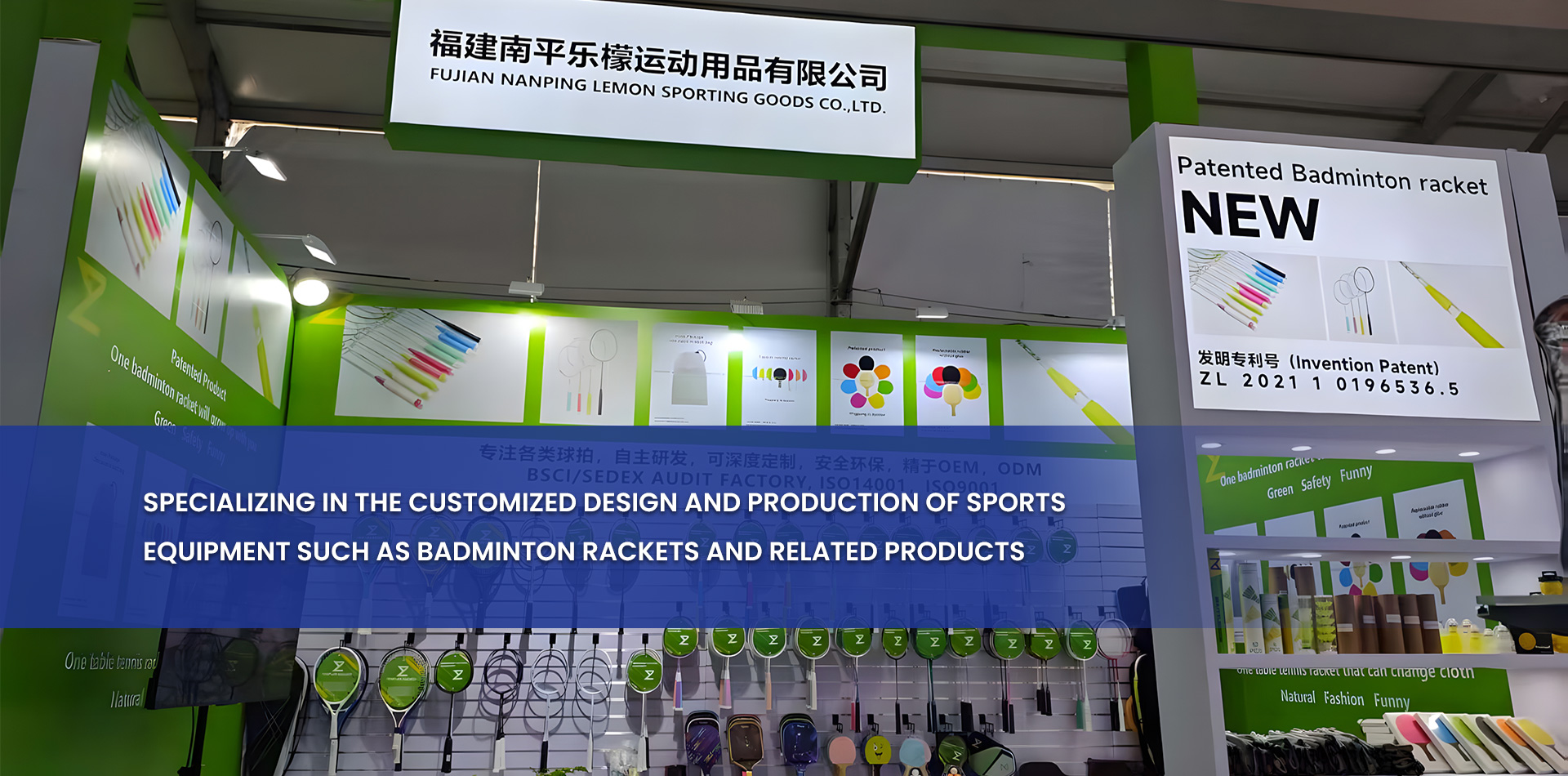
Selling imported goods successfully usually requires adaptation to local expectations.
Voltage and frequency: match the local power supply.
Language: manuals, labels and packaging in the market language.
Compliance text: importer identification and safety statements.
Packaging: retail-ready or transit-safe configurations.
Barcode: your GS1 barcode for retail channels.
Discuss customization before the first order, because changes to tooling and artwork affect lead time and MOQ.
Standard payment terms balance risk between buyer and seller. Common arrangements include a deposit with the balance against a copy of the bill of lading, letters of credit, and open account terms for established relationships.
For first orders, a deposit-plus-balance structure is normal. As trust builds, more flexible terms become available. Always confirm the terms in writing and use secure payment channels.
A good freight forwarder is worth more than a small difference in rate. They handle booking, documentation, customs brokerage and last-mile delivery, and they warn you about regulatory changes.
Ask for a door-to-door quotation and compare total landed cost rather than headline freight rate. Confirm which charges are included and which are billed separately.
Landed cost is the only meaningful basis for comparing suppliers. This table shows the typical components.
| Cost Component | Typical Share | Notes |
|---|---|---|
| Product cost (FOB) | 60â75% | The negotiable portion |
| Freight | 8â18% | Depends on mode and volume |
| Insurance | 0.3â1% | Recommended for sea freight |
| Import duty | 0â15% | Depends on HS code and origin |
| Customs clearance | 2â5% | Brokerage and handling |
| Inland delivery | 2â6% | From port to warehouse |
| Inspection | 0.5â2% | Optional but recommended |
Model these components before you negotiate. A supplier with a slightly higher FOB price but better packing efficiency can deliver a lower landed cost.
Regulatory requirements vary by market. These are the documents most commonly requested for this product category.
BWF Laws of Badminton: ensure the shipment documentation references this standard where applicable.
ISO 9001: ensure the shipment documentation references this standard where applicable.
CE: ensure the shipment documentation references this standard where applicable.
REACH: ensure the shipment documentation references this standard where applicable.
BWF approval: obtain a copy for customs and for your own records.
ISO 9001:2015: obtain a copy for customs and for your own records.
CE: obtain a copy for customs and for your own records.
Follow this sequence to keep a first import on schedule.
Prepare a complete technical specification and enquiry.
Obtain quotations on a consistent Incoterm.
Approve samples and confirm the final specification.
Agree payment terms, lead time and packaging.
Confirm the HS code and duty rate for your market.
Arrange freight and insurance with a forwarder.
Complete pre-shipment inspection before release.
Clear customs and arrange inland delivery.
Inspect on arrival and record results.
Incoterms allocate cost, risk and responsibility between buyer and seller. There is no universally correct term â the right choice depends on your freight volume, customs capability and cash-flow preference:
| Incoterm | Who Arranges Freight | Risk Transfers | Best For |
|---|---|---|---|
| EXW | Buyer | At factory gate | Buyers with their own China freight consolidation |
| FOB | Buyer (sea), seller to port | On board the vessel at origin port | Most experienced importers; full freight control |
| CIF | Seller | At origin port, but seller pays freight/insurance to destination | First-time importers who want simplicity on sea freight |
| DAP/DDP | Seller | At destination (DDP: import duty included too) | Buyers without local customs capability, or urgent small shipments |
A practical note for badminton rackets buyers: DDP looks simplest, but it hides the seller's freight margin and can slow customs clearance if the seller's broker is unfamiliar with your market. Once you ship regularly, moving to FOB with your own forwarder typically reduces landed cost by 8â15% and improves visibility. Whatever term you choose, write the full Incoterm with the named place into the contract â 'FOB China' is not a term, it is a dispute.
CIF or DDP is easiest for a first shipment because the supplier arranges more of the process. Experienced importers often move to FOB to control freight cost and the forwarder relationship.
Sea freight takes roughly 25â45 days depending on route and service, air freight 5â10 days, and rail 15â25 days to inland Europe. Add production lead time before shipment.
Ask your customs broker or the supplier for the recommended classification, then verify it with your local customs authority. Incorrect classification can cause penalties.
It is strongly recommended for first orders. A third-party inspection verifies quantity, quality and packaging before the goods leave the factory.
A deposit with the balance against shipping documents is common for first orders. Letters of credit are used for larger transactions, and open account terms develop with established relationships.
Yes. Most factories offer private-label packaging, custom marking and market-specific documentation. Confirm MOQ implications early.
Request a door-to-door quotation itemising all charges, confirm which are included, and model the full landed cost before ordering.
Document the condition on arrival with photographs, notify the supplier and forwarder promptly, and reference your inspection and insurance terms.
Global demand for badminton and racket sports equipment is shaped by three long-term forces: industrial upgrading in emerging economies, tightening quality and environmental regulation in developed markets, and the reorganisation of supply chains toward suppliers who can demonstrate reliability rather than merely offer low prices. For buyers, this means the bar for acceptable suppliers is rising, and the gap between professional and opportunistic manufacturers is widening.
At the same time, end customers are better informed than ever. They compare specifications, read reviews, and test products in ways that make hidden quality differences visible. A badminton rackets that performs well in a showroom but fails in the field creates a problem that no discount can offset, because the cost is borne by your customer relationship rather than your invoice.
Regulatory tightening: BWF Laws of Badminton, ISO 9001 and similar standards increasingly require documented compliance, not verbal assurance.
Supply chain resilience: buyers now value suppliers who can maintain output through disruptions and hold buffer stock.
Total cost focus: procurement teams increasingly evaluate lifetime cost rather than purchase price.
Digital transparency: online catalogues and reviews expose quality differences quickly.
Customization demand: buyers want products adapted to local voltage, sizing, language and packaging.
In this environment, the supplier you choose becomes part of your product strategy. A manufacturer that invests in testing, documentation and service protects your reputation; one that cuts corners transfers risk to you.

Packing is not an afterthought in export; it directly affects freight cost, damage rates and unloading efficiency. Because many industrial products are bulky relative to their weight, container loadability often matters more than unit price.
| Packing Factor | Effect on Cost | Optimisation Approach |
|---|---|---|
| Volumetric weight | Higher volume = higher freight | Reduce packaging bulk without weakening protection |
| Stackability | Fewer containers per shipment | Design cartons for stable stacking |
| Damage resistance | Returns and claims | Use appropriate cushioning and bracing |
| Unloading speed | Labour cost at destination | Modular packaging and clear labelling |
| Moisture protection | Corrosion and spoilage | Desiccants and barrier materials where needed |
Ask the supplier for the packing dimensions and weight of a standard shipment so you can calculate container utilisation before ordering. A small change in carton size can sometimes move a shipment from one container to two, or vice versa.
International trade carries commercial, logistics and currency risk. Sensible mitigation is inexpensive relative to the exposure.
Commercial risk: use clear contracts, deposits and, for large orders, letters of credit.
Logistics risk: insure sea freight and consider a forwarder with a strong track record.
Quality risk: pre-shipment inspection and documented acceptance criteria.
Currency risk: agree the currency and consider hedging for large orders.
Regulatory risk: verify certification and HS classification before shipment.
Counterparty risk: start with a trial order and build up volume.
None of these measures is elaborate, but together they turn an unpredictable process into a manageable one.
When engineers and procurement teams specify badminton rackets, they evaluate a consistent set of technical criteria. Understanding these criteria lets you write a precise requirement and compare suppliers fairly.
| Criterion | Why It Matters | What to Ask |
|---|---|---|
| Capacity or rating | Determines whether the product suits the application | Rated output under stated conditions |
| Material and construction | Drives durability and compliance | Material grade and certificates |
| Tolerance and precision | Affects fit, function and life | Dimensional tolerances and test method |
| Efficiency | Affects operating cost | Efficiency figures and test conditions |
| Serviceability | Determines downtime and cost | Access, spare parts, maintenance interval |
| Compliance | Required for market access | Certification scope and validity |
Request that suppliers quote against each criterion explicitly, rather than providing a generic brochure. A supplier who can address the criteria in detail is demonstrating genuine engineering capability.
Material choice is often the single most important decision in specification, because it determines strength, corrosion resistance, weight and cost. The right answer depends on the application, not on a universal 'best' material.
| Material Consideration | Influences | Typical Trade-off |
|---|---|---|
| Strength and stiffness | Load capacity and deformation | Higher strength may reduce ductility |
| Corrosion resistance | Service life in aggressive environments | Higher alloy content raises cost |
| Temperature resistance | Performance in hot or cold conditions | Specialty materials cost more |
| Weight | Handling and transport cost | Lighter materials may be weaker |
| Fabrication | Ease of forming and joining | Some materials are harder to process |
| Cost | Purchase price | Cheaper material may shorten life |
Discuss the operating environment with the supplier so material recommendations are based on real conditions. A grade that performs well in a dry workshop may corrode quickly in a humid plant, and the resulting failure is far more expensive than the difference in material cost.

Good installation and a disciplined maintenance routine extend service life substantially and protect any warranty. The supplier should provide clear documentation for each stage.
Verify the site conditions against the specification before installation.
Follow the manufacturer's mounting and connection instructions exactly.
Check alignment, fastening torque and clearances before commissioning.
Confirm electrical or process connections match the local supply.
Record installation details and any deviations for future reference.
Operate within the rated capacity and conditions stated in the manual.
Monitor performance indicators to detect drift early.
Train operators on correct use and on recognising abnormal behaviour.
Maintain a log of operating hours and any incidents.
Never override safety devices to maintain output.
| Interval | Task | Purpose |
|---|---|---|
| Daily | Visual inspection and monitoring | Detect anomalies early |
| Weekly | Check fastenings, lubrication, controls | Prevent wear and looseness |
| Monthly | Measure key parameters | Track performance drift |
| Quarterly | Inspect wear parts and replace as needed | Avoid unexpected failure |
| Annually | Full service and calibration | Restore optimal performance |
A modest preventive maintenance programme costs far less than unplanned downtime. The most common cause of premature failure is simply the absence of routine attention.
Documentation completeness: missing BWF approval paperwork can delay clearance.
Spare parts strategy: critical spares should be identified and stocked before commissioning.
Training requirement: operators who understand the product make fewer costly mistakes.
Warranty scope: understand exactly what is covered and for how long.
Change management: even small design changes should be documented and approved.
Total lead time: include production, inspection, shipping and clearance, not just production.
Seasonal capacity: plan around peak production periods to avoid delays.
Procurement decisions in this category are investments, and they should be evaluated as such. The relevant question is not whether a product costs less today, but whether it delivers more value over its service life.
A higher-quality badminton rackets typically costs somewhat more up front but delivers fewer failures, longer service intervals, lower energy or consumable cost, and greater customer satisfaction. When these benefits are quantified over the expected life, the premium is usually recovered quickly.
| Investment Factor | Low-Cost Option | Quality Option | Long-Term Effect |
|---|---|---|---|
| Purchase price | Lower | Higher | Quality option costs more initially |
| Failure rate | Higher | Lower | Fewer returns and claims |
| Maintenance | Frequent | Infrequent | Lower labour and downtime |
| Service life | Shorter | Longer | Better amortisation |
| Customer impact | Higher complaint risk | Higher satisfaction | Repeat business |
| Total cost | Often higher | Often lower | Quality option usually wins |
The lesson is consistent across industries: the cheapest purchase is rarely the cheapest ownership. Buyers who model total cost make better decisions and build stronger brands.
Service life depends on duty cycle, environment and maintenance. Ask the supplier for an expected life under defined conditions and compare it against your actual operating profile.
Request test reports, sample testing and, for critical orders, third-party verification. Claims without evidence should be treated as aspirations rather than specifications.
Most manufacturers offer customization of capacity, dimensions, materials, controls and branding. Discuss the implications for cost, lead time and minimum order quantity.
At minimum a specification sheet, installation and operation manual, maintenance schedule and applicable compliance documentation. For complex products, request commissioning guidance.
Very important. Timely technical support and spare parts availability determine how quickly a problem can be resolved, which directly affects your customer relationships.

Use this checklist to structure your next procurement cycle. Each item is drawn from the practices that distinguish successful sourcing programmes from ones that repeatedly encounter problems.
Specification written and approved covering application, duty and standards such as BWF Laws of Badminton.
Supplier shortlist evaluated against capability, quality system and references.
Samples tested from at least two production batches.
Certification verified for scope, issuing body and validity.
Commercial terms agreed including price, MOQ, Incoterms and payment.
Inspection plan defined with stages, methods and acceptance criteria.
Logistics arranged with a forwarder and clear delivery terms.
Documentation prepared for customs and market compliance.
Arrival inspection scheduled with a defined record format.
Performance review planned after the first operating period.
Supplier relationships improve fastest when performance is measured and reviewed regularly rather than discussed only when something goes wrong. The metrics below cover the dimensions that matter most.
| Dimension | Metric | Target | Review Frequency |
|---|---|---|---|
| Quality | Defect rate | Under 1% | Monthly |
| Delivery | On-time rate | Over 95% | Monthly |
| Documentation | Accuracy of paperwork | 100% | Per shipment |
| Responsiveness | Reply time to technical queries | Under 24 hours | Quarterly |
| Support | Spare parts lead time | As agreed | Quarterly |
| Commercial | Price stability | Within agreed band | Annually |
Share the results with the supplier. A performance review is most effective when it is a joint exercise aimed at improvement rather than a scorecard used to assign blame.
Every category of procurement carries risk. Naming the risks makes them manageable.
| Risk | Trigger | Impact | Mitigation |
|---|---|---|---|
| Quality failure | Material or process deviation | Returns and reputational damage | Batch testing and inspection |
| Delivery delay | Capacity or logistics disruption | Production stoppage | Buffer stock and lead-time planning |
| Compliance failure | Missing or incorrect certification | Customs rejection | Pre-verify certificates |
| Cost escalation | Freight or material price moves | Margin erosion | Contract terms and hedging |
| Concentration risk | Single supplier dependency | Vulnerability to disruption | Qualify a second supplier |
| Documentation error | Manual paperwork mistakes | Clearance delays | Checklists and digital records |
Mitigation does not have to be elaborate. The majority of risk in this category is removed by a specification, two qualified suppliers, batch testing and complete documentation.
The value of badminton and racket sports equipment is realised over years of operation, not at the moment of purchase. Buyers who evaluate suppliers on that basis make decisions that look conservative in the short term and prove wise over time.
Three factors drive long-term value: consistency, durability and support. Consistency means every shipment meets the specification. Durability means the product performs for the expected life under real conditions. Support means problems are resolved quickly and spares are available.
A supplier that delivers all three becomes a genuine commercial advantage. æå·ä¹æª¬è¿åºå£æéå ¬å¸ aims to be that kind of supplier, and invites buyers to evaluate us on exactly these terms.
If you are planning a first or repeat import of badminton and racket sports equipment, æå·ä¹æª¬è¿åºå£æéå ¬å¸ (www.factoryracket.com) can guide you through specification, packaging, documentation and shipping. Visit www.factoryracket.com to discuss your requirement and request a landed-cost quotation.
यह वेबसाइट यह सुनिश्चित करने के लिए कुकीज़ का उपयोग करती है कि आपको हमारी वेबसाइट पर सर्वोत्तम अनुभव मिले।


 English
 Español
 Pусский
 Français
 日本語
日本語 한국어
한국어 العربية
 Tiếng Việt
 中文
中文



 टेलीफ़ोन
टिप्पणी
(0)