

Before you commit to a new badminton rackets factory, ten specific questions separate suppliers who will perform from suppliers who will improvise. This guide lists each question, explains why it matters, and shows what a strong answer sounds like.
Every experienced importer carries one story about a factory that looked excellent on paper and failed in production. The lesson is never that paperwork is useless â it is that paperwork must be confirmed with structured questions, evidence and eventually a visit. This guide organises that confirmation into a framework any buyer can run.
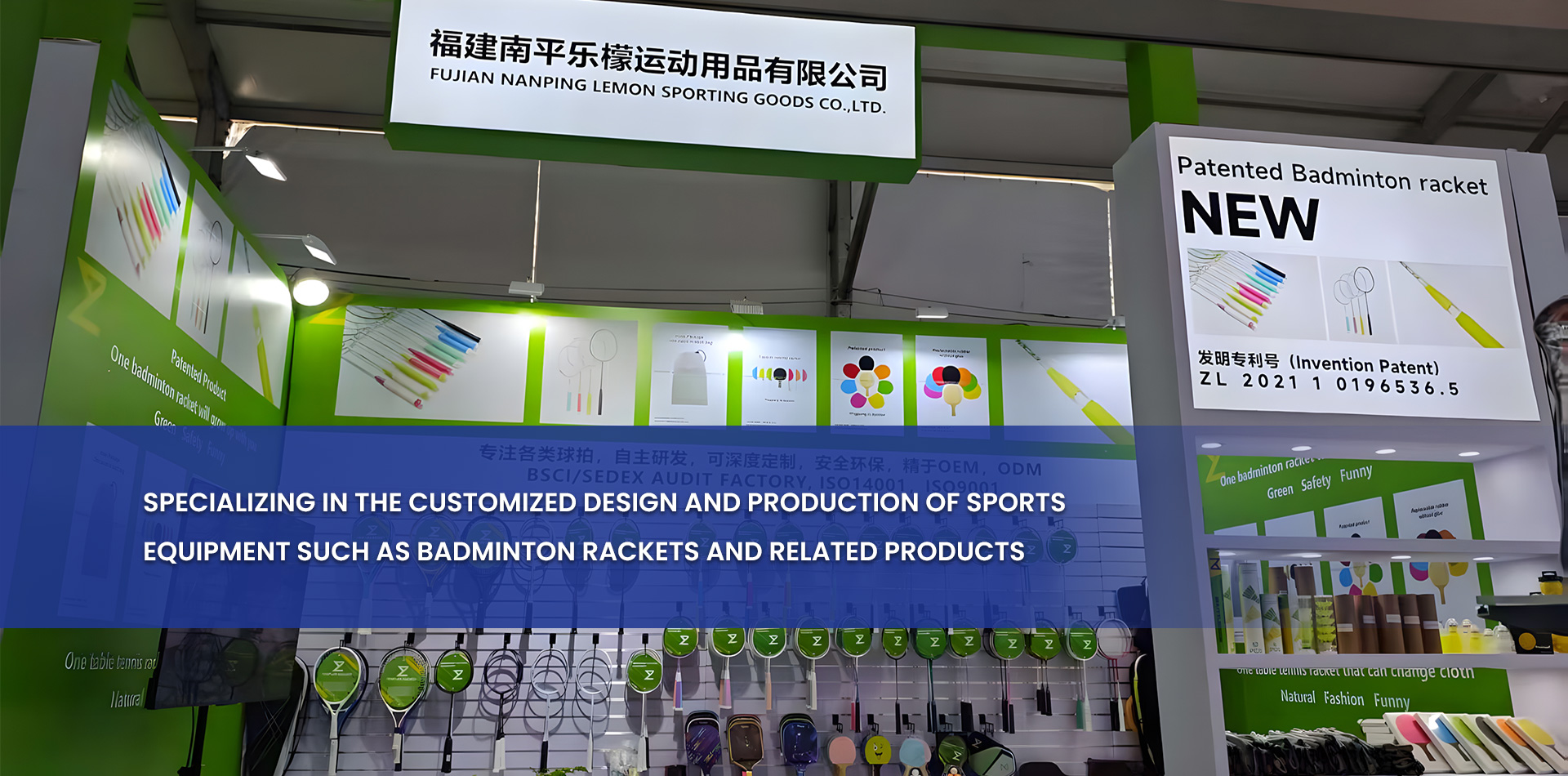
As a manufacturer based in China, æå·ä¹æª¬è¿åºå£æéå ¬å¸ (www.factoryracket.com) supplies badminton rackets, shuttlecocks, tennis rackets and related products to customers in more than forty markets. In this guide we explain what actually determines quality in this category, how to assess a factory before you commit, and how to build a supply relationship that holds up over years of repeat ordering.
Before you send a request for quotation, be precise about what you are buying. These are the questions that separate a professional sourcing decision from a hopeful one.
What is the production capacity and current lead time? A factory that cannot state monthly capacity in units cannot forecast reliably.
Which quality standards apply, and can they evidence compliance? Ask for BWF Laws of Badminton, ISO 9001 documentation rather than a verbal claim.
Is material traceability documented? Certificates of material origin prevent costly surprises.
What is the defect rate and how are returns handled? Ask for historical data, not a policy statement.
Can they customize to your market's specification? Voltage, sizing, labelling and packaging often differ by country.
What after-sales support is included? Spare parts availability and technical support determine lifetime cost.
What is the total landed cost? Freight, duty and durability matter more than FOB price.
Quality in badminton and racket sports equipment is the sum of four things: material selection, manufacturing precision, assembly consistency, and testing discipline. A product can look identical to a competitor and behave completely differently after six months in service if any one of these is weaker.
Material grade: the raw material must match the specification, with certificates to prove it.
Manufacturing precision: tolerances must hold across the production run, not just the sample.
Assembly consistency: repeatable processes prevent batch-to-batch variation.
Testing discipline: functional and safety testing must be routine, not exceptional.
For buyers, the practical implication is that you should evaluate capability rather than appearance. A well-equipped factory with documented processes will out-perform a low-cost workshop every time, even if the sample products look the same.
We recommend auditing five dimensions before the first paid order.
Ask for facility size, equipment list, monthly output, and the number of production lines. A factory that can describe its bottleneck process understands its own capacity. Request photos or a live video walkthrough of the production floor.
Confirm certification such as BWF approval, ISO 9001:2015 and ask to see the internal inspection records. A genuine quality system produces documents: incoming material checks, in-process checks, and final inspection reports.
Understand where raw materials come from and how they are verified. Vertically integrated suppliers control more of the quality chain and are less exposed to sub-supplier problems.
Ask which tests are performed in-house and which are outsourced to third parties. For export markets, third-party test reports from recognised laboratories carry more weight than internal claims.
Evaluate responsiveness during the quotation stage â it is a good predictor of post-sale behaviour. Ask about spare parts availability, technical documentation, and warranty terms in writing.
Most buyers eventually want their own branding, and the best time to discuss it is before the first order. Typical customization includes product sizing, colour, labelling, packaging, and documentation.
Product customization: dimensions, capacity, voltage and configuration tailored to your market.
Branding: logo marking, silk-screen printing, embossing or laser marking.
Packaging: neutral, retail-ready or private-label cartons with your barcode and compliance text.
Documentation: user manuals and compliance statements in your market's language.
Discuss minimum order quantities for customized runs early, because decoration and tooling often set a higher MOQ than the base product.
Unit price is only one part of the equation. The lowest quote frequently carries the highest total cost once durability, freight and returns are included.
| Cost Factor | What to Compare | Hidden Risk |
|---|---|---|
| Unit price | FOB per unit | Ignoring specification differences |
| Durability | Service life | Premature failure and warranty claims |
| Freight | Volumetric weight | Light but bulky shipments cost more |
| Duty and compliance | HS code and certification | Clearance delays |
| Returns | Defect rate | Reputational damage |
| Support | Spare parts and service | Downtime for your customer |
Build a landed-cost model and negotiate on the total. Suppliers respect buyers who understand their cost drivers because it signals a long-term relationship.
The best pricing and priority allocation go to buyers who order predictably. Share a rolling forecast, place consistent orders, and give clear feedback on quality. Factories reward reliable partners with better lead times and preferential treatment when capacity is tight.
It also helps to visit the factory when practical. A single visit reveals more about capability than months of email.
Not every supplier is the same kind of business. Understanding the model helps you choose the one that fits your needs.
| Supplier Type | Control Over Quality | Price Level | Best For | Main Risk |
|---|---|---|---|---|
| Direct factory | Highest | Competitive | Volume buyers | Higher MOQ |
| Trading company | Medium | Higher | Small or mixed orders | Less quality control |
| OEM/ODM partner | High | Competitive | Brand owners | Development time |
| Distributor | Low | Highest | Urgent small orders | Limited customization |
For most buyers building a brand or a stable catalogue, a direct factory with genuine customization capability offers the best balance of quality control, price and flexibility.
Depending on your destination market, several standards and certifications may apply to badminton and racket sports equipment. Confirming them early prevents costly compliance surprises.
BWF Laws of Badminton: confirm the factory can supply documentation for this standard where it applies to your market.
ISO 9001: confirm the factory can supply documentation for this standard where it applies to your market.
CE: confirm the factory can supply documentation for this standard where it applies to your market.
REACH: confirm the factory can supply documentation for this standard where it applies to your market.
BWF approval: request the certificate and verify its validity and scope.
ISO 9001:2015: request the certificate and verify its validity and scope.
CE: request the certificate and verify its validity and scope.
A structured process reduces risk far more than a clever negotiation.
Define your technical specification and target market requirements.
Shortlist three suppliers and request capability data and references.
Order paid samples and test them against your specification.
Audit the chosen factory against the five dimensions above.
Agree pricing, MOQ, packaging and lead times in writing.
Place a trial order and inspect the shipment on arrival.
Review performance with real customers before scaling.
Lock in capacity and lead times for the coming season.
Qualifying suppliers takes real effort, so buyers naturally ask how many to run in parallel. Too few creates dependency risk; too many spreads sampling and audit budget thin and delays the first order. The right number depends on your volume and category stability:
| Buying Situation | Recommended Shortlist | Reasoning |
|---|---|---|
| New category, no incumbent | 3 factories | Parallel sampling reveals real capability differences; competitive quotes are meaningful |
| Existing supplier, adding second source | 2 factories | One incumbent benchmark plus one challenger keeps evaluation honest |
| High-volume core product | 2â3 factories | Volume justifies full audits; splitting orders hedges disruption |
| Low-volume or trial market | 1â2 factories | Audit effort would exceed order value; use trading companies or smaller MOQ factories |
Whatever the number, keep the evaluation criteria identical for every candidate and record the evidence. A documented comparison protects the decision when colleagues ask why one factory was chosen, and it becomes the baseline for the annual review that follows.
MOQ depends on the product and level of customization. Standard configurations typically start lower than private-label runs, which may require tooling or dedicated production. Ask the factory for a clear MOQ schedule by SKU.
A first order typically takes three to six weeks including sampling and approval, while repeat orders are usually shorter. Peak season can extend lead times, so plan ahead.
Order paid samples from at least two production batches, test them against your specification, and require a pre-shipment inspection before release. Documented inspection is more reliable than any sample alone.
Yes. Most manufacturers of badminton and racket sports equipment offer customization of size, colour, branding and packaging. Discuss the MOQ implications before committing.
At minimum, expect BWF approval, ISO 9001:2015, CE. The exact requirement depends on your destination market and the application.
Compare landed cost per unit of service life, not FOB price alone. Include freight, duty, defect rate and spare parts in the calculation.
A reliable manufacturer maintains a spare parts inventory and provides technical documentation and support. Confirm the terms in writing before ordering.
Begin with a trial order, measure performance honestly, and share feedback. Consistent ordering earns better pricing and priority.
Professional procurement rarely treats each order as a separate event. Instead, the year is organised into a sourcing cycle: a quarterly capacity review, a mid-year supplier audit, an annual commercial renegotiation and a rolling improvement log. This rhythm turns scattered transactions into a managed programme.
Q1: review last year's defect, delivery and price data; set this year's targets and reconfirm forecasts with factories.
Q2: audit the top suppliers on site or by video; verify certification renewals before they lapse.
Q3: renegotiate commercial terms using the full-year volume picture rather than order-by-order pressure.
Q4: qualify one new supplier as a second source; test the supply chain against a simulated disruption.
Continuous: log every non-conformance and every exceptional save; the log drives next year's agenda.
Buyers who run this cycle report fewer surprises, because problems surface at a scheduled review instead of at a container's arrival. The cycle also changes the relationship with suppliers: badminton and racket sports equipment factories plan better for buyers who are predictable, and predictability is rewarded with priority when capacity tightens.
A trial order is not a small discount hunt; it is a paid experiment that tests the factory's entire chain â specification understanding, production, quality control, packing and shipping â at limited exposure. Experienced buyers design trial orders deliberately:
| Trial Order Design Choice | What It Tests | Practical Tip |
|---|---|---|
| Order the product you actually intend to buy | The real spec, not a simplified one | Never trial with an easier specification than production will use |
| Size the order at 10â25% of a full order | Production process at partial scale | Large enough to force normal production lines, small enough to limit exposure |
| Include destination-market packaging | Packing line and labelling discipline | Packing failures discovered after arrival cost twice |
| Run your full inspection on the trial | Documents, sampling, clearance | The trial rehearses everything, including your own process |
| Score the supplier formally afterwards | Communication and correction ability | A written scorecard makes the scale-up decision factual |
The most common trial-order mistake is succeeding on paper but failing to scale: the trial ran on the factory's best line with its best operators. Ask which line and shift will produce the volume order, and whether the trial conditions can be reproduced.
Verification effort should match exposure. A full site visit is the deepest tool but costs travel days; a structured video audit covers most ground at a fraction of the cost; third-party inspection adds independent eyes at the moment of truth. A practical layering:
Desk audit first: certificates, business licence, export history, reference calls â before any sampling fee.
Structured video audit second: a live walkthrough following a fixed checklist, recording agreed sections.
Third-party during-production inspection for orders above your risk threshold.
On-site visit reserved for strategic suppliers, custom projects and any supplier whose answers raised questions.
Buyers sometimes skip straight to trust after one good shipment. The better habit is to re-verify periodically: factories change owners, lines and management, and a supplier audited two years ago is not automatically the supplier operating today.
Ask about a problem, not about performance: 'Tell me about the last issue you had with them' reveals more than 'Are they good?'
Ask recent buyers: a reference from three years ago describes a different factory.
Ask about recovery: every supplier has failures; what distinguishes them is speed and fairness of recovery.
Ask the factory for a reference too: how a supplier describes its other customers is itself informative.
Warranty documents are written to be reassuring and to be narrow at the same time. Before relying on one, buyers should locate four specific boundaries: duration, scope, exclusions and the claim procedure. Each boundary is where disappointment lives.
| Warranty Element | Typical Wording | What to Confirm |
|---|---|---|
| Duration | '12 months from B/L date' | Date basis matters: B/L, arrival or installation start can differ by months |
| Scope | 'Defects in material and workmanship' | Wear parts, consumables and cosmetic items are often excluded |
| Exclusions | 'Improper use or maintenance' | Ask what documentation they require to prove proper maintenance |
| Remedy | 'Repair or replacement at supplier discretion' | Who pays freight, customs and labour for the remedy? |
| Claim procedure | 'Notify in writing' | Deadline windows; evidence format; response time commitment |
Where the standard warranty falls short, it can be negotiated â extended duration for core components, stocked spare-part commitments, or a response-time service level. Factories with confidence in their product agree to specific commitments more readily than those without.

Packaging decisions made casually at order time create costs at every later stage: freight (volumetric waste), damage (inadequate protection), clearance (missing marks) and retail (wrong language or barcode). A packaging annex to the purchase order prevents most of it:
Export cartons: specified strength (e.g. bursting strength or stacking grade), moisture protection for sea freight.
Shipping marks: consistent across cartons, packing list and bill of lading.
Inner packaging: language of user manuals, barcode and label requirements of the destination market.
Palletisation: pallet dimensions, fumigation or ISPM-15 treatment for wooden packaging.
Volume data: carton dimensions and gross weights supplied before booking, not at loading.
For badminton and racket sports equipment products that are heavy or bulky relative to value, packaging optimisation often moves landed cost more than price negotiation does. Ask the factory for their standard packing proposal and challenge the volumetric efficiency of it â they usually have an alternative.
Test names appear on reports without explanation, and buyers equate all testing with safety. Understanding what each method proves prevents both false confidence and unnecessary test spending:
| Test Type | What It Proves | What It Does Not Prove |
|---|---|---|
| Type (design) test | The design meets the standard under lab conditions | That your production batch meets it too |
| Routine / production test | Each unit passes basic checks at the factory | Full compliance with every clause of the standard |
| Sample-based batch test | That lot met acceptance criteria at sampling points | Zero defects in unsampled units |
| Field / site trial | Performance in real operating conditions | Repeatability across all production |
| Ageing / life test | Expected service life under accelerated conditions | Exact calendar life in your environment |
A sound verification strategy layers these: type test certificates for market access, routine tests for every unit, and periodic independent batch testing scaled to your volumes and risk tolerance.
Neither is universally right. Trading companies add cost but also add service: smaller MOQs, mixed-product containers, better communication. The failure mode is not the middleman â it is not knowing who you are dealing with. Confirm which you are talking to and evaluate accordingly.
At minimum: one from normal production (not a hand-polished prototype), tested against the full specification, plus a retained golden sample kept by both parties as the production reference. For critical applications, request a second sample from a different production run.
For the first three orders with any new supplier, yes â it is the cheapest available risk control. After a clean track record, most buyers move to every second or third order, with immediate reinstatement after any non-conformance.
The specification acknowledgement: a signed confirmation by the supplier of the complete technical and commercial specification. Nearly every dispute reduces to a disagreement about what was agreed; this clause makes the agreement itself unambiguous.
Ask for the cause in writing (material index, freight, currency), request evidence, and compare against public indices. Legitimate increases follow input costs; opportunistic ones follow demand. The discussion is easier when your annual agreement includes a price-adjustment mechanism from the start.
Sourcing capability should live in the organisation, not in one person's inbox. Three habits transfer knowledge reliably: a shared supplier file with audit results and scorecards; a decision log recording why each major sourcing choice was made; and a specification library where every order's technical annex is archived and version-controlled. New team members inherit judgement instead of restarting the learning curve â and the business is resilient to absences and turnover.
Writing risks down changes how teams buy. The register below covers the risks that account for most losses in {indv.lower()} sourcing; each has a mitigation and a natural owner. Copy it, adapt the weightings to your category, and review it quarterly.
| Risk | Early Indicator | Mitigation | Owner |
|---|---|---|---|
| Quality drift | Rising minor defects in incoming inspection | Tighten AQL sampling; request process data | QC lead |
| Supply disruption | Single line, single region, no buffer | Qualify second source; hold 4â6 weeks buffer | Procurement |
| Compliance gap | Certificate nearing expiry or scope mismatch | Renewal calendar; pre-shipment document check | Compliance |
| Cost volatility | Input-cost indices moving against you | Adjustment clauses; periodic hedging for large exposure | Finance |
| Logistics delay | Port congestion, carrier reliability falling | Earlier bookings; backup forwarder | Logistics |
| Knowledge loss | One person holds all supplier context | Shared supplier file; decision log | Department head |
The discipline is not in the table itself but in the review: risks that were mitigated get retired, new ones get added, and each entry has a date and an owner. An unreviewed register is decoration.

Top suppliers should be reviewed annually with the same seriousness as a strategic project. A structured agenda keeps the meeting factual and forward-looking:
Scorecard review: defect rate, on-time rate, documentation accuracy and responsiveness over twelve months.
Incident retrospective: every non-conformance raised, its root cause and the state of its corrective action.
Forward demand: your forecast for next year; their capacity plan and any constraints they foresee.
Improvement proposals: cost, lead time or quality improvements available from either side.
Commercial reset: price-adjustment mechanism, payment terms and any warranty or service updates.
Relationship health: communication quality, escalation experience, and what each side would change.
Suppliers consistently invest more in buyers who run this meeting well, because it signals a predictable, growing account. The meeting is also where second-source decisions are tested: a supplier told honestly about your dual-sourcing policy responds better than one who discovers it from a competitor's packaging.
Timing shapes negotiation outcomes more than most technique does. {p0l} factories manage capacity and cash across the year, and leverage follows that rhythm:
| Period | Factory Situation | Buyer Leverage |
|---|---|---|
| After Chinese New Year | Restarting lines, seeking orders to fill capacity | Strong â ask for annual pricing with volume tiers |
| Mid-year (JuneâJuly) | Production peak in many categories | Weak for price; good time to lock Q4 capacity |
| Pre-peak (AugustâSeptember) | Booking holiday-season production | Book capacity early; price concessions unlikely |
| Year-end (NovemberâDecember) | Cash collection focus | Good for payment-term flexibility and closing open issues |
None of this means waiting for the calendar instead of negotiating when needed. It means knowing, when a major negotiation is optional, which window gives both sides the best chance of a durable agreement.
Buyers evaluate æå·ä¹æª¬è¿åºå£æéå ¬å¸ on the same dimensions this article has used throughout: documented capability, transparent quality evidence, dependable delivery and fair recovery when problems occur. We keep sample retention, batch records and calibration schedules current, and we welcome audits â in person or by video â because a factory confident in its system loses nothing by showing it.
Whether your next step is a trial order, a factory audit or a technical discussion about {p0l}, our engineering and export teams are available to walk through the checks described in this guide. Bring your operating conditions and your questions; a capable supplier should make the verification easy.
If you are sourcing badminton and racket sports equipment for distribution, OEM production or a project, æå·ä¹æª¬è¿åºå£æéå ¬å¸ (www.factoryracket.com) would be glad to share our experience and provide samples. Visit www.factoryracket.com to explore the catalogue, request a quotation, and discuss customization for your market.
यह वेबसाइट यह सुनिश्चित करने के लिए कुकीज़ का उपयोग करती है कि आपको हमारी वेबसाइट पर सर्वोत्तम अनुभव मिले।


 English
 Español
 Pусский
 Français
 日本語
日本語 한국어
한국어 العربية
 Tiếng Việt
 中文
中文



 टेलीफ़ोन
टिप्पणी
(0)