


In badminton racket supply, a zinc coating is accepted in microns by steel thickness, and the grade is written into the standard rather than chosen by the plater. ISO 1461 assigns local thickness from about 45 to 85 microns on hot-dip work depending on section, and electroplated zinc carries its own thinner classes. A badminton racket drawing that says zinc plated has left the thickness class, the reference and the measurement method to the vendor's default. The same test applies to any wholesale badminton racket.
For badminton and racket sports equipment work, the coating grade lives in the standard's thickness table, and the drawing either names it or leaves the choice to the plater.
This guide explains how badminton and racket sports equipment is tested, which standards apply, what certification actually proves, and how purchasers can verify quality before, during and after production. It reflects the practices at 杭州乐檬进出口有限公司 (www.factoryracket.com).
Vendors make broad quality claims. On badminton racket orders, these are the specific questions that turn a claim into evidence.
Which standard, exactly? Obtain the standard number, not a general assurance.
Who issued the certificate? For badminton and racket sports equipment work, recognised third-party bodies carry more weight than self-declarations.
What is the scope? A certificate may cover only part of the product range.
Is it current? Confirm validity dates and renewal status.
What is the incoming verification protocol? Insist on seeing the checklist and sampling plan.
What happens when a fault is found? For badminton rackets buyers, a defined corrective process matters more than a zero-fault promise.
A quality management system (QMS) is the documented set of processes that control how a badminton racket is made, inspected and released. Across badminton racket projects, certification such as ISO 9001 confirms that the system exists and is audited; it does not by itself guarantee product quality, but it makes quality repeatable.
Incoming material control: verifying raw materials against specification before use.
In-process control: checking parameters and dimensions during production.
Final examination: verifying finished goods before packing.
Corrective action: investigating and fixing root causes of faults.
Purchasers should treat a QMS as a foundation. On badminton racket orders, on its own it is necessary but not sufficient; it must be paired with genuine product testing.
Different badminton rackets require different tests, but the categories are consistent across manufacturing:
| Test Category | What It Verifies | Typical Method |
|---|---|---|
| Dimensional | Size and tolerance | Caliper, gauge, CMM |
| Functional | Performance under load | Bench and endurance testing |
| Material | Composition and grade | Spectrometry, certificate review |
| Safety | Conformity with standards | Type testing, Hipot, pressure test |
| Environmental | Resistance to conditions | Humidity, temperature, salt spray |
On badminton racket jobs, ask which of these are performed routinely and which only on request. In badminton and racket sports equipment work, a plant that tests every batch is fundamentally different from one that tests only the first sample.
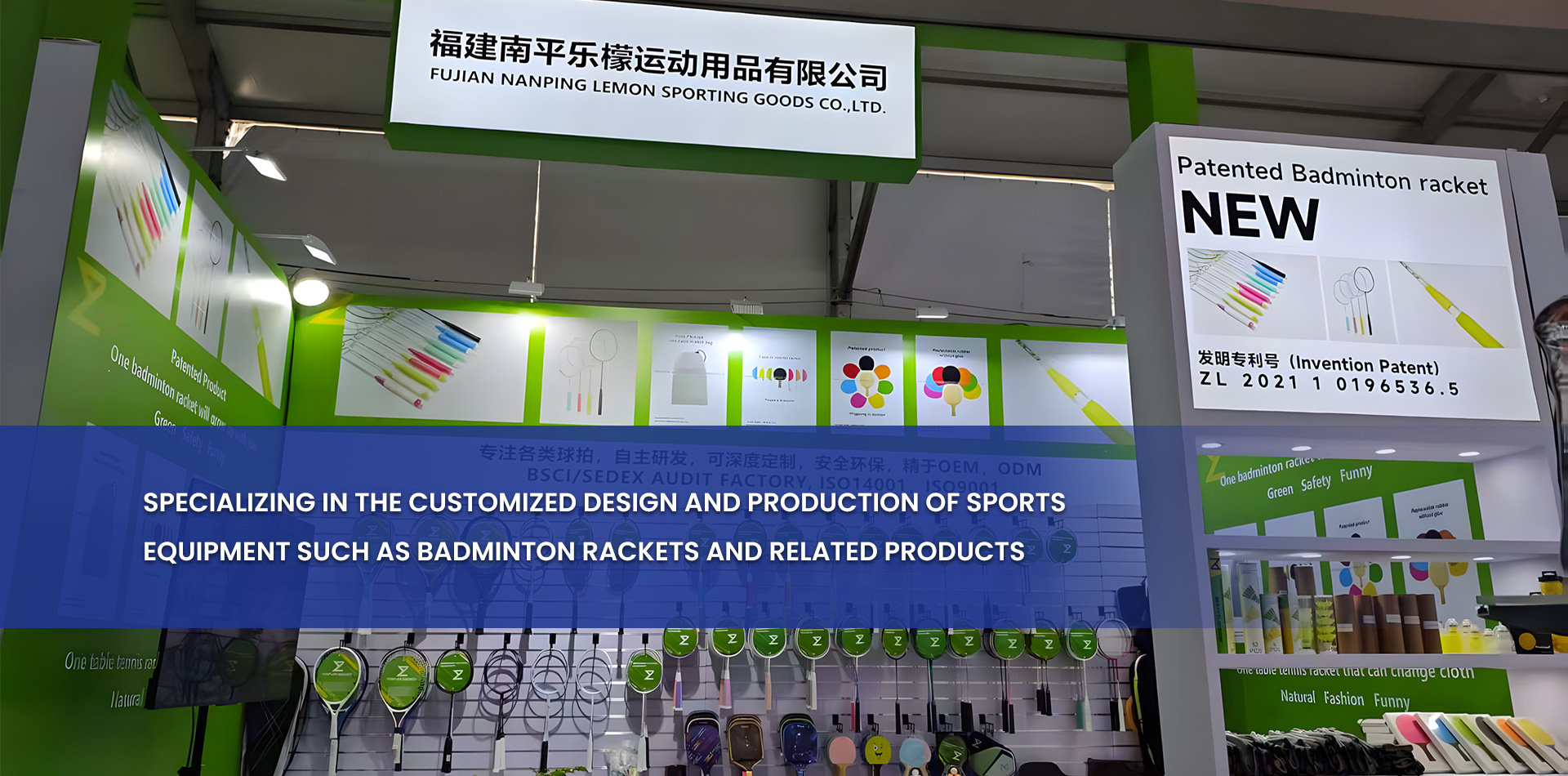
Certification confirms that a badminton racket or process has been assessed against a standard by an accredited body. On badminton racket orders, it is a valuable signal, but it is not a guarantee of every unit.
Proves: the tested sample complied with the standard at the time of testing.
Does not prove: that every production unit complies, or that the production site maintains the same process over time.
Best practice: combine certification with routine batch testing and periodic re-verification.
For badminton and racket sports equipment, the relevant certifications typically include BWF approval, ISO 9001:2015, CE. In badminton racket supply, make certain of the scope of each certificate covers the exact product you are buying.
For badminton racket buyers, a simple incoming verification protocol is the purchaser's last line of defence. In badminton and racket sports equipment work, it is inexpensive and catches the majority of issues before they reach clients.
For any badminton rackets programme, sample the consignment according to a defined plan (for example, per pallet or per batch).
In badminton and racket sports equipment programmes, measure the key specification parameters and record the results.
Functionally test a representative subset.
Within badminton and racket sports equipment, verify labelling, packaging and documentation against the approved artwork.
On clubs and academies projects, document results by batch number and raise trends with the provider.
For badminton rackets buyers, reject or negotiate remedies for any lot that fails the criteria.
Keep the data. Across badminton racket projects, a purchaser who can show three months of measured results has far more leverage in a quality conversation than one who reports only that a batch felt wrong.
For badminton and racket sports equipment work, understanding why quality varies helps importers ask better questions.
Raw material substitution: lower-grade material used to reduce cost.
Tool wear: moulds and dies degrade and produce out-of-tolerance parts over time.
Process drift: settings change without documentation.
Operator variation: manual steps introduce inconsistency.
Sub-vendor quality: components from third parties may not meet the same standard.
In badminton and racket sports equipment programmes, a plant that monitors these factors proactively prevents most faults before they occur.

Across clubs and academies, put quality terms in the agreement, not just in conversation. Within badminton and racket sports equipment, specify the standard, the sampling plan, the acceptance criteria, the remedy for non-conformance, and the documentation you expect with each shipment.
This protects both sides. In badminton racket supply, the provider knows exactly what is expected, and you have a defined basis for discussion if something goes wrong.
On badminton racket jobs, recurring quality management means tracking a small set of metrics rather than reacting to individual complaints.
| Metric | What It Measures | Target | Action If Breached |
|---|---|---|---|
| Fault rate | Share of units failing verification | < 1% | Investigate root cause with vendor |
| On-time dispatch | Consignments meeting the agreed date | > 95% | Audit capacity and planning |
| First-pass yield | Units passing without rework | > 98% | Analyse process weak points |
| Warranty claim rate | Field failures under warranty | < 2% | Reassess design and testing |
| Documentation accuracy | Correctness of shipping paperwork | 100% | Tighten release checklist |
Track these monthly and review them with the provider quarterly. In badminton and racket sports equipment practice, a small set of well-understood metrics beats a large set of ignored reports.
Across clubs and academies, the applicable standards depend on your destination market and product category. These are the ones most commonly requested.
BWF Laws of Badminton: verify the production site can supply the current certificate and that its scope covers badminton racket.
ISO 9001: verify the plant can supply the current certificate and that its scope covers badminton racket.
CE: verify the production site can supply the current certificate and that its scope covers badminton racket.
REACH: verify the production site can supply the current certificate and that its scope covers badminton racket.
BWF approval: request the certificate and confirm validity.
ISO 9001:2015: request the certificate and confirm validity.
CE: request the certificate and confirm validity.
For badminton racket buyers, this is the workflow that turns a quality policy into shipped quality.
Approve the badminton racket requirement and the golden sample in writing.
Verify incoming materials against certificates.
Control in-process parameters and record them.
Run functional and safety tests at defined intervals.
Perform 100% or AQL final verification before packing.
On clubs and academies projects, complete a pre-dispatch verification with photographic records.
Archive the badminton racket lot documentation for traceability.
In badminton and racket sports equipment programmes, feed field performance back into design and process improvement.

On badminton racket orders, coating thickness is verified by a named method on a stated location pattern, because the coating is never uniform and the average hides the thin spot. For badminton rackets buyers, the method: magnetic induction on steel, eddy current on non-ferrous bases, or a microscope cross-section where the base is mixed. The pattern: a stated number of points per part and per batch, with the minimum, not the mean, as the acceptance value. And the grade: the thickness class from the drawing, in microns. A badminton racket batch accepted on one reading per part has accepted a coating nobody measured.
| Element | What to Specify for a Badminton Racket | The Failure It Prevents |
|---|---|---|
| Thickness class | Grade in microns by steel thickness, from the coating standard | A plater choosing its own class |
| Measurement method | Magnetic induction, eddy current or cross-section, named | A method that does not apply to the base metal |
| Point pattern | Readings per part and per batch, minimum governs | A mean that hides the thin area |
| Bake for embrittlement | Hours and temperature in degrees C, completed within hours of plating | A delayed fracture in high-strength steel |
| Adhesion check | Bend or peel test per the standard, on a stated frequency | A coating that flakes during assembly |
| Salt-spray exposure | Hours per the applicable standard, if corrosion class applies | A grade claimed without endurance |
On badminton racket orders, the minimum governs, and stating that rule in the purchase order is the cheapest acceptance decision available. In badminton and racket sports equipment practice, a plater measured on the average will plate thin at edges and holes, which is exactly where corrosion starts; a plater measured on the minimum plates the edges properly and the average takes care of itself. The rule costs one line and changes where the plater spends the zinc.
In badminton racket supply, the bake is a schedule item, not a datasheet item, and it belongs on the router. For high-strength badminton rackets components in clubs and academies, the bake must be completed within the first hours after plating, while the hydrogen is still where it entered, and the record should carry the oven number, the temperature in degrees C and the start and stop times. A bake done the next morning is a bake that mostly protects the schedule.
Because position is a distance from a coordinate system, and the coordinate system is built from the datums in the badminton racket order the drawing lists them. Across clubs and academies, swapping the secondary and tertiary datums rotates the system and moves the tolerance zone, so the same part can pass on one alignment and fail on another. The drawing fixes the badminton racket order; the measurement report should name the alignment actually used.
In badminton and racket sports equipment programmes, the thickness follows the coating standard's table, which grades by steel thickness and process. For badminton rackets buyers, hot-dip galvanising typically assigns from about 45 to 85 microns depending on section, while electroplated zinc carries thinner classes. Specify the standard, the class and the measurement method, and accept on the minimum reading rather than the mean, because edges and holes are where thin spots form.
For badminton rackets buyers, because moulded parts shrink after ejection and the shrinkage varies with material, wall section and process conditions, so the achievable band is wider than a machined-metal general tolerance. For badminton and racket sports equipment work, the plastics standard assigns tolerance groups by material and accuracy class. Applying a metal-oriented group to a moulding produces a rejection rate the moulder cannot influence, and the argument shows up at the first consignment.
It depends on the sports brands application, and the figure that matters is the pressure dew point at the point of use. On clubs and academies projects, a refrigeration dryer holds roughly plus 3 degrees C; a desiccant dryer reaches minus 40 degrees C or lower. In badminton and racket sports equipment programmes, measure at the machine inlet over a full day, because re-evaporation between dryer and use point changes the condition, and specify the class per the air-quality standard rather than the word clean.
No. On badminton racket jobs, burning ratings are granted per thickness and per colour, and the certificate names the specimen it was earned on. A rating tested on a 3 mm plaque says nothing reliable about a 1.5 mm wall, because the flame-retardant package has less material to work with. In most clubs and academies settings, require the rating on the final thickness, and re-check it if the wall section or colour changes.
On badminton racket orders, a measuring instruction is written for the afternoon shift, and it succeeds when two operators on different days produce the same number. It states the fixture or the datum order, the instrument and its range, the number of measurement points and where they sit, the force or the probe approach, and the temperature the badminton racket must have reached before measuring. A badminton racket instruction that says measure the diameter has left five decisions to whoever holds the gauge.
| Instruction Element | What to State for a Badminton Racket | What Its Absence Produces |
|---|---|---|
| Fixture and datum order | How the badminton racket is held, and which surfaces establish the axes, in order | Two alignments and two verdicts |
| Instrument and range | Instrument identity, resolution in mm or microns, calibration date | A caliper asked to do a micrometer's job |
| Point pattern | Number of points and their positions, marked on a sketch | A mean over positions nobody agreed on |
| Approach and force | Probe approach direction, gauge force or anvil type | A reading that deforms the surface it measures |
| Thermal condition | Soak time at 20 degrees C, or a stated correction | A summer measurement and a winter one |
| Recording rule | Individual readings, not a mean, with the badminton racket stated | Scatter hidden inside a single figure |
On badminton racket orders, the point pattern is the element with the highest argument rate, because a diameter measured at one position is a chord, a diameter measured at two positions is a guess about ovality, and a diameter measured at three or more positions along the length is a measurement. Within badminton and racket sports equipment operations, the sketch costs a minute and ends the class of dispute that begins with the words but I measured it right here.
On clubs and academies projects, the thermal condition decides the season the result belongs to. Steel grows about 11.5 microns per metre per degree C, so a part measured warm at 30 degrees C reports a size the drawing never specified. For badminton rackets parts in clubs and academies, a soak rule, or a stated correction per degree, converts the shop floor's thermometer into part of the result rather than an unmeasured influence.
Across badminton racket projects, coating thickness is a map, and the thin spots have known addresses. Within badminton and racket sports equipment, edges, where surface tension or current density pulls the coating away. Across clubs and academies, holes and internal corners, where the line of sight or the current fails. Threads, where the class applies to the pitch diameter and the crest reads thin. And welded areas, where the roughness lowers the effective thickness by a measurable share. A badminton racket acceptance plan that samples the middle of a flat face has sampled the thickest place on the part.
| Location | What to Expect on a Badminton Racket | What to Measure There |
|---|---|---|
| Edges | The thinnest zone on most dipped or plated parts | A reading in microns at the edge, before deburring policy hides it |
| Internal corners | Low current density or shadowed dip | Two readings, at the corner and 5 mm away |
| Holes and bores | Line-of-sight failure in dipping | A borescope or a sectioned sample per batch |
| Threads | Crest reads thin, class applies to pitch diameter | Thread fit check after coating, go and no-go |
| Weld areas | Roughness lowers effective thickness | Reading on the weld and on the parent metal, recorded separately |
| Masked zones | Where the fixture touched, by design or by accident | The mask map, agreed before production |
The edge rule deserves its own line in the order, because most coating standards permit the thickness to fall at edges by a defined share, and the purchaser's inspector discovers the permission at the badminton racket receipt. On badminton racket jobs, agreeing the edge allowance, and the deburring standard it depends on, before the first batch is a sentence that prevents the first return.
On badminton racket orders, threaded parts fail in the field for a reason that has a name: the coating was applied to the full thread and the class applies to the pitch diameter. For badminton rackets fasteners in clubs and academies, the acceptance check after coating is a go and no-go gauge, not a thickness reading, because the fit is the property the assembly needs and the gauge is the only instrument that measures it directly.

In badminton racket supply, two deliveries of the same part number can differ in six legitimate ways, and every one of them is invisible until it causes a failure. Within badminton and racket sports equipment, the sub-tier changed: a different foundry, mill or coil vendor behind the same paperwork. The badminton racket process moved: a new machine, a new shift or a relocated line. The badminton racket material lot changed at a different mill. The tool aged past a wear point. The packaging or preservation changed. In most clubs and academies settings, and the personnel changed, which matters where a process depends on a hand skill. A badminton racket provider asked only for the part number has been asked nothing that would reveal any of the six.
| Change | What to Ask the Badminton Racket Vendor | How It Shows Up in the badminton racket |
|---|---|---|
| Sub-tier change | Who made it this time, named, per the notification agreement | A chemistry or surface signature the old records do not match |
| Machine or line move | Machine identity and location, per the badminton racket process sheet | A new capability signature on the same drawing |
| Material mill change | Mill name on the certificate, compared with the register | Properties inside tolerance but outside habit |
| Tool wear | Tool life counter against the wear limit, per order | A drift that passes every point check |
| Packaging change | Preservation method and materials, per the badminton racket requirement | Corrosion or contamination at the destination |
| Personnel change | Which hand skills the badminton racket process depends on, and who now holds them | A capability that left with one operator |
On badminton racket orders, the notification agreement is the instrument that converts these six questions into a routine, and it is one paragraph: the vendor notifies the importer, in writing and before consignment, of changes to sub-tier, process location, material source, tooling and preservation. For badminton and racket sports equipment teams, without the paragraph, every question above is an interrogation after a failure; with it, the questions are a checklist the vendor answers as a matter of course.
On badminton racket jobs, two deliveries can also be compared directly, and the comparison is often faster than the interrogation. For badminton rackets supply in clubs and academies, keeping a retained sample from each accepted lot, with its certificate, gives the receiver a physical baseline: a property or a signature that has moved between deliveries is a change to investigate, even when both deliveries pass their own points.
For badminton racket buyers, plating consistency is compared on the same locations every time, because the coating is a map and a different map is not a comparison. The fixed locations: edge, internal corner, flat face and thread or bore, numbered on a sketch that travels with the badminton racket lot. The readings: minimum and mean, in microns, per location. Across clubs and academies, and the bath records: chemistry analysis dates, current density and load size, requested with the certificate. A badminton racket batch compared on wherever the inspector happened to measure has been compared with noise.
| Comparison Point | What to Record for a Badminton Racket | The Drift It Reveals |
|---|---|---|
| Fixed-location readings | Microns at the same numbered points, per batch | A thin spot that moved between batches |
| Minimum versus mean | Both figures, per part and per batch | An average hiding a falling edge |
| Bath analysis date | Days since the last chemistry check, per bath | A bath drifting toward its correction interval |
| Current density | Amperes per square decimetre, per load | A burn or a thin zone from an overloaded rack |
| Load size | Parts per rack against the bath volume | A dilution effect nobody prices |
| Rack contact marks | Where the rack touched, per the mask map | An uncoated patch found at assembly |
On badminton racket orders, bath chemistry has a rhythm, and the rhythm explains most batch-to-batch drift: an analysis every stated number of ampere-hours, a correction after it, and a recovery curve that the next few loads ride. For badminton rackets buyers, asking for the analysis dates with the certificate places each batch on that curve, and a batch near the end of the interval is a batch to sample harder.
On badminton and racket sports equipment assignments, rack contact marks are the plating equivalent of the fixture mark, and they belong in the mask map agreed before production. For badminton rackets components in clubs and academies, agreeing where the rack may touch, and requiring those points to be functional or reworked, prevents the category of finding that surfaces during assembly and is invisible on the coating certificate.
It can, but the report is not usable for acceptance. On badminton racket orders, position is measured from a coordinate system built on the datums in the drawing's order, and if the alignment actually used is not named, the result cannot be reproduced or compared with another report. On clubs and academies projects, obtain the alignment to be stated on the report, including any rotation applied, and treat an unnamed alignment as an incomplete result rather than a pass.
On badminton racket orders, the bake may change the hardness slightly, and the change is usually within the coating class's own range. Across badminton and racket sports equipment projects, the bake is not optional, though: high-strength steel absorbs hydrogen during plating and the bake, completed within hours near 200 degrees C, is the standard remedy. If hardness matters, specify the acceptable range after bake rather than before, and require the bake record with the oven number and the start and stop times.
Because it is still moving. For badminton rackets buyers, mouldings shrink for hours after ejection as they cool and stabilise, and the amount depends on material, wall section and process conditions. In most clubs and academies settings, measure at a stated interval, commonly 24 hours, at a stated temperature, and state that condition on the drawing. A part measured warm and accepted will be a different size when it reaches the badminton racket line.
In badminton racket supply, specify the three classes separately, because particles, water and oil have independent limits. For badminton rackets buyers, instrument air and painting typically need a dry, oil-free class; rough actuation tolerates more moisture. State the class per the air quality standard, the pressure dew point required, and measure at the point of use, because the dryer's datasheet describes the dryer and not the pipe run between it and the machine.
Not automatically. Across badminton racket projects, some additive packages shift their burning behaviour with colorant load, so a grade earned on natural resin is not inherited by every coloured version. Across clubs and academies, require the rating to be evidenced on the final colour and thickness, and where the colour changes in service, ask for the vendor's statement on the interaction before accepting the change, rather than after.

Across badminton racket projects, a result that sits close to its limit is decided by the uncertainty, and the decision rule should have been written before the measurement. On clubs and academies projects, ISO 14253-1 states the plain version: prove conformity only when the result lies inside the tolerance reduced by the uncertainty, and prove nonconformity only when it lies outside the tolerance increased by it. Everything between is a shared issue, not a verdict. A badminton racket acceptance decided from a raw number near the limit has decided nothing, and the argument that follows is the argument that rule prevents.
| Decision Element | What to Fix for a Badminton Racket | The Disagreement It Ends |
|---|---|---|
| Uncertainty statement | Microns or degrees C, per instrument, from the calibration | A verdict computed without the margin |
| Guard band | The tolerance reduced by the stated uncertainty, in writing | A pass that the second laboratory rejects |
| Ambiguous zone rule | Who measures again, with which method, and who pays | A shared result treated as a verdict |
| Disposition authority | The named role that may accept, reject or concession | An engineer's signature nobody can trace |
| Retest limit | The number of retests permitted, then escalation | A best-of-five acceptance |
| Record of the rule | The rule itself, kept with the report | A decision made under one rule and audited under another |
For badminton racket buyers, guard banding has a cost, and the cost is honest: tightening the acceptance band by the uncertainty rejects a share of parts that would have served perfectly. In badminton and racket sports equipment work, the alternative is a plant that ships its own measurement noise to the client and calls the escaped share luck. Stating the band, and reviewing it when the instrument improves, keeps the cost at the level the badminton racket process can afford rather than at the level nobody has measured.
The disposition authority is a role, not a meeting. For badminton rackets receipts in clubs and academies, one named person holds the right to accept, reject or grant a concession inside the ambiguous zone, with the concession recorded and time-limited, and the rule reviewed with the vendor quarterly. On badminton racket jobs, without the role, marginal results are decided by whoever is most persuasive that afternoon.
In badminton and racket sports equipment programmes, every instrument carries two dates, and the second one matters more than the first. The calibration date says the instrument was verified once. In badminton racket supply, the due date, and whether it has been passed, says whether today's readings mean anything. The second date is the one that fails quietly: a gauge past its due date in a busy receiving bay is producing numbers with a confidence nobody has audited, and every acceptance decided on those numbers inherits the failure. A badminton racket file built on instruments with an unchecked due date has built its verdicts on borrowed confidence.
| Instrument Check | What to Verify for a Badminton Racket | The Failure It Prevents |
|---|---|---|
| Due date live | The due date checked before use, by the operator | A calibration lapse discovered by an auditor |
| Reference standards | Verify blocks or gauges with their own certificates | A drift absorbed into every reading |
| Out-of-tolerance review | Which results were affected since the last check | A recall nobody can bound |
| Environment log | Temperature at measurement, in degrees C | A thermal error inside a calibration |
| Handling rule | Drops, overloads and repairs reported the same day | A damaged instrument back in service |
| Ownership | A named owner per instrument, in the register | A date that nobody watches |
On badminton racket jobs, the out-of-tolerance review is the check with the longest shadow, because a gauge found outside its tolerance invalidates every result since its last good check, and the affected lots can only be found if the register links instruments to results. Within badminton and racket sports equipment, the review is uncomfortable and it is the difference between a calibration system and a wall of stickers.
Ownership is the control that keeps the register alive. For badminton rackets measurement in clubs and academies, each instrument carries a named owner who checks the due date before use and reports damage the same day, and the register is reviewed when the schedule says so. On badminton racket jobs, the alternative is a register that is accurate until the first busy month and hopeful thereafter.
A condition without a value is an intention. On clubs and academies projects, the nine lines below cover the points where this round's disciplines become checkable, each written as a number, a method and the failure it prevents. The values are drawn from the cited standards and form a defensible starting envelope for clubs and academies; tighten them where your own process is less forgiving, and record each tightening against the BWF Laws of Badminton clause that justifies it.
| Condition | Value to write down | Method to cite | What the number prevents |
|---|---|---|---|
| Rubber hardness | 75 Shore A, measured per the standard with a 15 s dwell | Hardness report naming standard and specimen | a number three labs report three ways |
| Oil in air | Not exceeding 1 mg per cubic metre, vapour included | Oil indicator test at the point of use | a filter schedule assumed rather than tested |
| Burning rating | V-1 on the final wall thickness and colour, certificate naming both | Accredited report compared with the dispatch | a rating earned on a thicker section |
| Regrind cap | Not exceeding 10 percent, declared per lot | Batch record field with the declaration | a reserve spent without notice |
| Filter oil class | Class stated for particles, water and oil separately | Air quality class written as three numbers | one number covering three failures |
| Flatness sampling | Grid pitch 1.0 mm, minimum 49 points per face | Sampling density stated in the report | a wave between the sampled points |
| Hydrogen relief bake | 6 h at 200 degrees C, completed within 4 h of plating | Bake record with oven identity and times | a delayed fracture in high-strength steel |
| Pressure dew point | 3 degrees C at pressure, measured at the point of use | Weekly dew point log at the machine inlet | a datasheet figure from another room |
| Guard band | Accept only inside the tolerance reduced by 0.005 mm uncertainty | Decision rule stated on the report | a shared result treated as a verdict |
Three lines carry most of the operational weight. For badminton racket buyers, the datum order with its named alignment decides whether a geometric result can be reproduced at all. Across clubs and academies, the uncertainty statement decides whether a marginal number is a verdict or a shared issue. For badminton and racket sports equipment teams, and the coating minimum decides whether the thin spot is measured or averaged away.
Verify what reproduces: the 0.15 mm position callout with its datum order and the 0.005 mm uncertainty, because neither can be audited after the fact if it was never written down.
Verify what corrodes or cracks: the 65 micron coating minimum and the 6 h bake at 200 degrees C, because both failures arrive months after the dispatch.
Verify what drifts: the 3 degrees C dew point at the point of use and the 0.3 mm warp measured at 24 hours, because both move after the datasheet was printed.
Send the nine lines with the enquiry and ask for a written response naming, for each one, the value the badminton racket plant will hold, the method it will use and any deviation it needs. A vendor that answers all three is quoting against your criteria; one that answers the badminton racket price alone is quoting against a catalogue. The reply can come through the contact page at https://www.factoryracket.com/contact and it should arrive as a document you can attach to the order, because that is where a number becomes enforceable for badminton rackets supply in clubs and academies.
On badminton racket jobs, each discipline in this guide ends in a document a provider can produce without a special project: the measurement report with its datum order, instrument uncertainty and per-feature tolerances; the coating record with its thickness class in microns, minimum-reading rule and bake times; the moulded-part drawing with its tolerance group, weld line map and hardness condition; the air quality class with its dew point and oil figure at the point of use; and the fire report naming grade, thickness and colour. Send those five to 杭州乐檬进出口有限公司 through the contact page at https://www.factoryracket.com/contact and ask for a written answer against BWF Laws of Badminton, naming who owns each item for your badminton racket order. In most clubs and academies settings, a reply that arrives as documents can be attached to the purchase order; a reply that arrives as reassurance cannot, and the difference appears at the first failure rather than at the first quote.
यह वेबसाइट यह सुनिश्चित करने के लिए कुकीज़ का उपयोग करती है कि आपको हमारी वेबसाइट पर सर्वोत्तम अनुभव मिले।


 English
 Español
 Pусский
 Français
 日本語
 한국어
 العربية
 Tiếng Việt
 中文



 टेलीफ़ोन
टिप्पणी
(0)