


For badminton racket buyers, a material declaration is a document with a half-life, and most purchasers file it as if it were permanent. Substances get added to candidate lists, formulations change with a raw-material source, and a badminton racket declaration signed two years ago describes a product the plant no longer makes. The declaration is only current when it is tied to a badminton racket revision and a date, and the check is one line: does the revision on the declaration match the revision on the dispatch? The same test applies to any wholesale badminton racket.
In badminton and racket sports equipment practice, a material declaration has a half-life, and filing it as permanent is how conformity files go quietly stale.
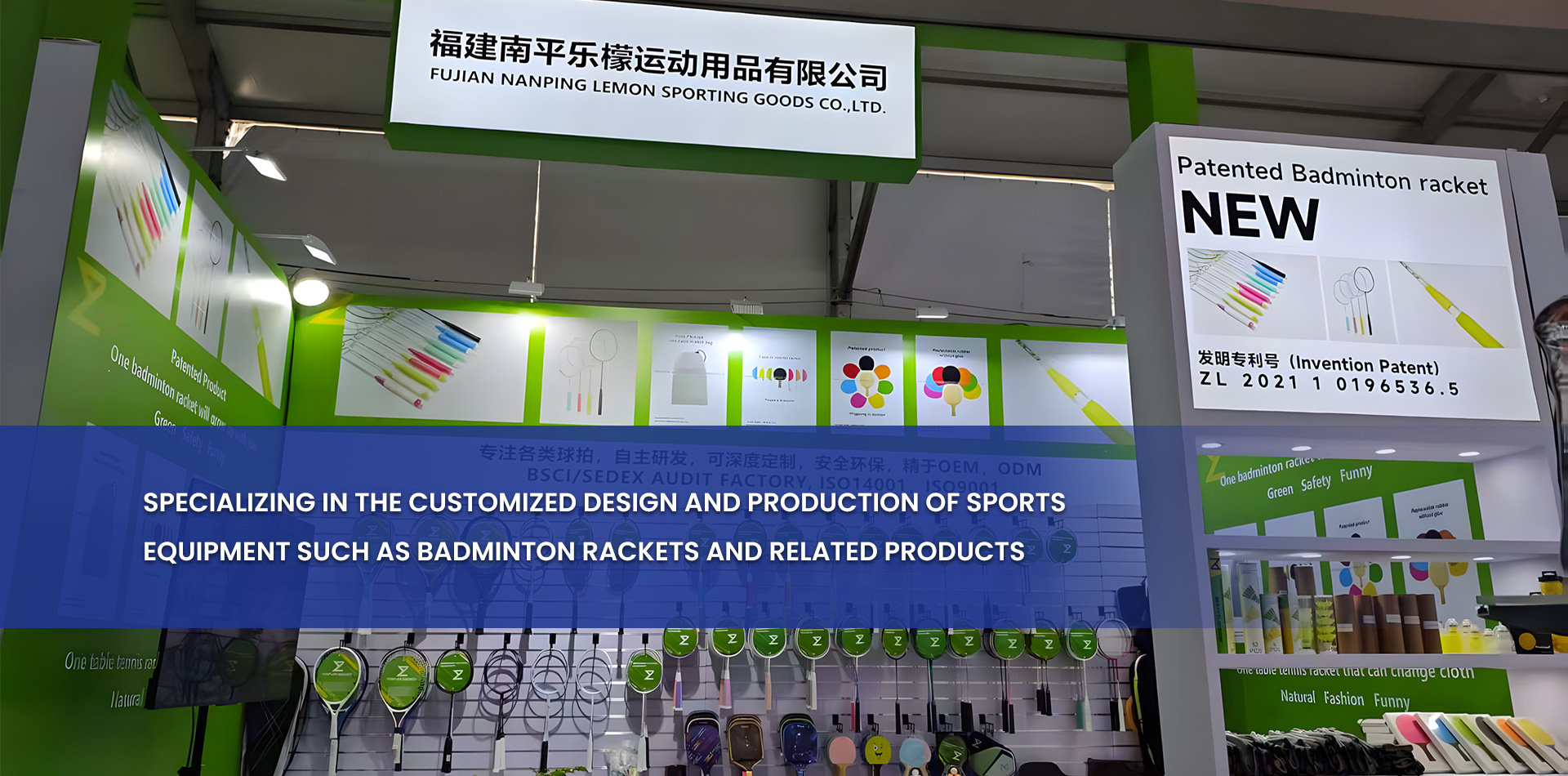
This guide explains how badminton and racket sports equipment is tested, which standards apply, what certification actually proves, and how importers can verify quality before, during and after production. It reflects the practices at 杭州乐檬进出口有限公司 (www.factoryracket.com).
Vendors make broad quality claims. For badminton racket buyers, these are the specific questions that turn a claim into evidence.
Which standard, exactly? Obtain the standard number, not a general assurance.
WHO issued the certificate?For badminton and racket sports equipment work, recognised third-party bodies carry more weight than self-declarations.
What is the scope? A certificate may cover only part of the product range.
Is it current? Validate validity dates and renewal status.
What is the incoming verification protocol? Require the checklist and sampling plan.
What happens when a fault is found?For badminton rackets buyers, a defined corrective process matters more than a zero-fault promise.
A quality management system (QMS) is the documented set of processes that control how a badminton racket is made, inspected and released. For badminton racket buyers, certification such as ISO 9001 confirms that the system exists and is audited; it does not by itself guarantee product quality, but it makes quality repeatable.
Incoming material control: verifying raw materials against specification before use.
In-process control: checking parameters and dimensions during production.
Final verification: verifying finished goods before packing.
Corrective action: investigating and fixing root causes of faults.
Purchasers should treat a QMS as a foundation. On badminton racket orders, on its own it is necessary but not sufficient; it must be paired with genuine product testing.
Different badminton rackets require different tests, but the categories are consistent across manufacturing:
| Test Category | What It Verifies | Typical Method |
|---|---|---|
| Dimensional | Size and tolerance | Caliper, gauge, CMM |
| Functional | Performance under load | Bench and endurance testing |
| Material | Composition and grade | Spectrometry, certificate review |
| Safety | Conformity with standards | Type testing, Hipot, pressure test |
| Environmental | Resistance to conditions | Humidity, temperature, salt spray |
For badminton racket buyers, ask which of these are performed routinely and which only on request. In badminton and racket sports equipment work, a plant that tests every batch is fundamentally different from one that tests only the first sample.
Certification confirms that a badminton racket or process has been assessed against a standard by an accredited body. On badminton racket orders, it is a valuable signal, but it is not a guarantee of every unit.
Proves: the tested sample complied with the standard at the time of testing.
Does not prove: that every production unit complies, or that the production site maintains the same process over time.
Best practice: combine certification with routine batch testing and periodic re-verification.
For badminton and racket sports equipment, the relevant certifications typically include BWF approval, ISO 9001:2015, CE. Across badminton racket projects, make certain of the scope of each certificate covers the exact product you are buying.
Across badminton racket projects, a simple incoming examination protocol is the importer's last line of defence. In badminton and racket sports equipment work, it is inexpensive and catches the majority of issues before they reach clients.
Within badminton and racket sports equipment, sample the dispatch according to a defined plan (for example, per pallet or per batch).
In badminton and racket sports equipment programmes, measure the key specification parameters and record the results.
Functionally test a representative subset.
Within badminton and racket sports equipment, verify labelling, packaging and documentation against the approved artwork.
Across clubs and academies, document results by batch number and raise trends with the vendor.
For badminton rackets buyers, reject or negotiate remedies for any lot that fails the criteria.
Keep the data. On badminton racket orders, an importer who can show three months of measured results has far more leverage in a quality conversation than one who reports only that a batch felt wrong.
For badminton and racket sports equipment work, understanding why quality varies helps importers ask better questions.
Raw material substitution: lower-grade material used to reduce cost.
Tool wear: moulds and dies degrade and produce out-of-tolerance parts over time.
Process drift: settings change without documentation.
Operator variation: manual steps introduce inconsistency.
Sub-vendor quality: components from third parties may not meet the same standard.
In badminton and racket sports equipment programmes, a plant that monitors these factors proactively prevents most faults before they occur.
Across clubs and academies, put quality terms in the agreement, not just in conversation. Within badminton and racket sports equipment, specify the standard, the sampling plan, the acceptance criteria, the remedy for non-conformance, and the documentation you expect with each shipment.
This protects both sides. On badminton racket jobs, the provider knows exactly what is expected, and you have a defined basis for discussion if something goes wrong.
On badminton racket jobs, recurring quality management means tracking a small set of metrics rather than reacting to individual complaints.
| Metric | What It Measures | Target | Action If Breached |
|---|---|---|---|
| Fault rate | Share of units failing examination | < 1% | Investigate root cause with vendor |
| On-time dispatch | Consignments meeting the agreed date | > 95% | Examine capacity and planning |
| First-pass yield | Units passing without rework | > 98% | Analyse process weak points |
| Warranty claim rate | Field failures under warranty | < 2% | Reassess design and testing |
| Documentation accuracy | Correctness of shipping paperwork | 100% | Tighten release checklist |
Track these monthly and review them with the provider quarterly. In badminton and racket sports equipment practice, a small set of well-understood metrics beats a large set of ignored reports.
Across clubs and academies, the applicable standards depend on your destination market and product category. These are the ones most commonly requested.
BWF Laws of Badminton:verify the production site can supply the current certificate and that its scope covers badminton racket.
ISO 9001:verify the production site can supply the current certificate and that its scope covers badminton racket.
CE:verify the production site can supply the current certificate and that its scope covers badminton racket.
REACH:verify the production site can supply the current certificate and that its scope covers badminton racket.
BWF approval: request the certificate and confirm validity.
ISO 9001:2015: request the certificate and confirm validity.
CE: request the certificate and confirm validity.
Across badminton racket projects, this is the workflow that turns a quality policy into shipped quality.
Approve the badminton racket requirement and the golden sample in writing.
Verify incoming materials against certificates.
Control in-process parameters and record them.
Run functional and safety tests at defined intervals.
Perform 100% or AQL final verification before packing.
In badminton and racket sports equipment programmes, complete a pre-dispatch examination with photographic records.
Archive the badminton racket lot documentation for traceability.
In badminton and racket sports equipment programmes, feed field performance back into design and process improvement.
An usable declaration is anchored to a badminton racket, a revision and a date, and everything else follows from that anchor. The badminton racket must be identified precisely enough that the document cannot be attached to a different item — model, type code, hardware revision. The revision matters because formulations and sub-providers change without the model number changing: a badminton racket declaration without a revision is a declaration of a product that may no longer exist. Across badminton racket projects, the date matters because substance lists move, and every interval of validity is an assumption somebody should be able to defend.
| Declaration Element | What to Require on a Badminton Racket Declaration | Why the Element Decides Usability |
|---|---|---|
| Product identification | Model, type code and hardware revision, matching the delivered goods | A document that cannot be tied to any specific consignment |
| Scope statement | Which directive or regulation is declared, with the edition | Conformity claimed against a text nobody can locate |
| Substance table or reference | Homogeneous-material logic and applied exemptions, cited by number | An assertion with no map behind it |
| Test evidence reference | The reports behind the table, with laboratory and date | A table that cannot be defended when challenged |
| Signatory | A named person with authority, not a department mailbox | A document nobody at the vendor owns |
| Revision link | The declaration tied to the drawing or BOM revision it describes | A change of material that leaves the file stale |
| Refresh interval | A stated reissue cycle and the events that trigger one | A file that ages silently while the list grows |
Across badminton racket projects, the exemptions column is where sloppy declarations separate from careful ones. Across badminton and racket sports equipment projects, exemptions are numbered, they have expiry dates, and they apply to specific applications; a declaration that says exempt where applicable has outsourced the verification to nobody. The same is true of the provider's own supply chain: a plant declaring a badminton racket product is declaring its sub-providers' materials, and the declaration is only as current as the declarations it collected. Asking how the badminton racket plant refreshes its incoming declarations is a legitimate qualification question, and the answer predicts the file's condition in two years.
Register the declarations, do not archive them. On badminton racket orders, a one-line register per part — declaration date, revision covered, refresh due — turns a folder of PDFs into a system that shows which files are current, which are stale and which were never collected. In badminton and racket sports equipment practice, the register takes minutes per part and it converts the annual conformity review from an archaeology exercise into an update round. For badminton racket programmes in clubs and academies, the register is also the first thing an auditor or a client audit asks for, and producing it quickly changes the tone of that conversation.
In badminton and racket sports equipment programmes, four clauses: the remedy (repair, replacement or credit, and who chooses), the trigger (what evidence starts the claim and who decides the cause), the duration (what starts the clock), and the exclusions (freight, labour, reinstallation, consequential costs). Across clubs and academies, insist on seeing the duration to run from commissioning with a cap after dispatch, and ask for two closed claim cases from the past year as a preview of the service.
For badminton racket buyers, current means tied to the hardware revision you received and dated within the provider's stated refresh cycle. In badminton and racket sports equipment work, verify that the declaration's revision matches the dispatch, that any exemptions are cited by number, and keep a register with a refresh-due column so stale files surface before an audit instead of during one. A declaration without a revision is a description of a badminton racket that may no longer exist.
For badminton rackets buyers, answer four questions in order and record them: the classification against the control list with its basis, the destination against current restrictions, the consignee and end user against restricted-party lists, and whether any answer triggers permission. On badminton racket jobs, if a licence is needed, file before production — the clock runs in weeks. In badminton and racket sports equipment work, keep the classification record per product family; it turns the question into a lookup.
In badminton and racket sports equipment programmes, the protocol and its version, the data points you need to read and write with their update intervals, the electrical interface conditions, and the firmware revision you expect the dispatch to carry. Within badminton and racket sports equipment, then agree an acceptance test: a witnessed live exchange of those points against your own system before final settlement. In badminton racket supply, a protocol name in a datasheet is a dialect claim, not an integration.
For badminton and racket sports equipment teams, call the supplier on the number already in your vendor master — never a number supplied in the change request — and confirm with a person whose name you know. Within badminton and racket sports equipment, require dual approval for the change in your own system and log it. Across badminton racket projects, the email asking for the change cannot carry the verification, because the email channel is exactly what the fraud controls; one call defeats the entire class.

On badminton racket orders, quantity disputes are the cheapest disputes to prevent and among the most frequent to suffer, because both parties were correct under different assumptions. A badminton racket ordered by the piece and delivered by the carton, an over-dispatch nobody authorised, a part-carton that the invoice rounds up — each is a mismatch of conventions rather than a failure of anyone's honesty. The badminton racket order is where the conventions get fixed, in three or four lines that cost nothing to write and remove an entire class of receiving argument.
| Order Line | What to State for a Badminton Racket Order | The Argument It Prevents |
|---|---|---|
| Unit of measure | Pieces, sets, metres or kilograms, named per line — and what one unit physically is | A carton priced as a piece or a set invoiced as two |
| Over/under tolerance | The percentage the vendor may ship over or under, or the word exact | A 7 percent over-consignment billed and hard to refuse |
| Part-unit policy | Whether broken cartons and split sets are permitted, and how they are priced | A rounding rule discovered at goods-in |
| Counting method | How quantities are verified: piece count, weigh-count, or label with the packer's name | Two honest counts that disagree by a shift's worth |
| Minimum order quantity interaction | How MOQ rounding interacts with the tolerance, stated once | A line reordered at 1.2 times the condition every cycle |
| Short-dispatch remedy | What happens when the dispatch is under: balance consignment, credit, or reorder | A shortfall argued as a negotiation instead of a rule |
On badminton racket orders, the tolerance line does most of the work, and it should be read twice before it is accepted. In badminton and racket sports equipment programmes, an over-consignment tolerance of five percent looks symmetrical, but the purchaser pays for every percentage point shipped over while the provider prices every point shipped under into its own yield planning; asymmetry in who benefits is worth one sentence of negotiation. Where the badminton racket is consumed against a production plan rather than stocked, the word exact is often cheaper than any tolerance, because an over-dispatch becomes the purchaser's inventory issue the moment it crosses the dock.
In badminton and racket sports equipment work, counting method sounds bureaucratic until the first disagreement, and then it is the only thing in the file. A badminton racket dispatch verified by weigh-count against an unverified piece weight produces a dispute neither party can win; the same dispatch counted at the carton level with one carton broken out per pallet is verified in minutes and defensible for years. The method goes on the badminton racket order, the receiver applies it, and the packer's name on the label closes the loop back to the production site. For badminton rackets supply in clubs and academies, the three lines — unit, tolerance, method — are the whole discipline.
Across badminton racket projects, a declaration file is usable when it answers three questions in one look: which revision this document describes, when it was issued, and when it must be refreshed. Everything else — the substance table, the exemptions, the badminton racket test references — is content inside that frame, and the frame is what most files are missing. For badminton and racket sports equipment schedules, building the frame is a half-day of template work, and it converts a folder of provider PDFs into a conformity instrument a client or an auditor can actually navigate.
| File Element | What to Hold for Each Badminton Racket Part | Why It Is There |
|---|---|---|
| Part and revision line | The model, type code and hardware revision the declaration covers | Documents attached to the wrong hardware |
| Issue date and interval | When it was issued and the refresh cycle the vendor commits to | Files that age silently |
| Declaration type | Full declaration, declaration by exemption, or test-based — stated, not guessed | Two documents that look alike and mean different things |
| Substance summary | The reportable substances and where they sit, in one view | A table nobody can act on |
| Evidence pointer | the badminton racket test reports or third-party data behind the table, by reference | An assertion with no support when challenged |
| Register entry | One line in the register: part, revision, date, refresh due | The annual review that starts from zero |
The register entry is the element that compounds. In most clubs and academies settings, one line per part, kept current at receipt of each new declaration, gives the programme a live view of its own conformity surface: which parts are covered, which declarations are stale, which providers have never provided one. For badminton and racket sports equipment work, without the register, the same information exists only as a folder whose completeness nobody knows until somebody asks. For badminton rackets categories in clubs and academies, the register is also the honest answer to the client question about substance conformity — a document that shows the system, not a promise about it.
For any badminton rackets programme, set the refresh trigger in the vendor's hands and in the calendar at the same time. The provider declares that a badminton racket or material change triggers a new declaration — that is the contractual half — and the calendar provides the backstop: any file older than the stated interval is queried, whether or not the vendor remembers a change. On clubs and academies projects, the two mechanisms together catch the failure mode that leaks through either alone: the change nobody remembered to declare, and the calendar nobody got round to reviewing.
For badminton racket buyers, a declaration is a claim, and claims about materials can be screened cheaply before anyone pays for a full test programme. For badminton rackets buyers, screening instruments — handheld X-ray fluorescence for metals and coatings, Fourier-transform infrared checks on polymers, ion-selective tests for surface treatments — do not replace laboratory analysis, and they are not supposed to. Their job is to find the declaration that disagrees with the badminton racket, which is where every expensive discovery would otherwise have started. A badminton racket screening round costs a fraction of one laboratory confirmation and it tells you where to spend the laboratory money.
| Screening Tool | What It Checks on a Badminton Racket Part | How to Use the Result |
|---|---|---|
| Handheld XRF | Elemental composition of metals and coating layers, non-destructive | Compare against the declaration's alloy and coating claims; investigate any mismatch |
| FTIR spot check | Polymer family identification on plastic components | Catch a resin substitution the declaration does not mention |
| Coating thickness gauge | Layer count and thickness against the declared finish system | A finish that differs from the declared stack |
| Libraries of known patterns | Spectra compared against the declared material's reference | A reading outside the reference band is a question, not a verdict |
| Confirmation laboratory test | The definitive method on the parts the screening flagged | Screening finds the candidate; the laboratory settles it |
The screening logic matters more than the instruments. For any badminton rackets programme, screen a sample of parts against the declarations on file, compare the readings to what the paper says, and treat disagreement as a question addressed to the vendor rather than a verdict. In badminton racket supply, most mismatches have ordinary explanations — a revision the declaration did not follow, a sub-vendor change, a homogeneous-material assumption that does not survive the instrument — and each explanation, once given, improves the declaration process itself. The badminton racket vendor that answers the first mismatch well is the one whose next declaration can be trusted further.
Across clubs and academies, calibrate the screening programme to the exposure, not to the paperwork. Parts that touch the regulated substance lists, parts from badminton racket suppliers new to declarations, and parts whose supply chain changed recently earn a screening round; parts with a stable declaration history earn a spot check once a year. For badminton racket buyers, the programme is a few hours per quarter at that rate, and it does something no volume of paper can: it keeps the declarations connected to the physical goods, which is the only connection that makes the file worth anything. For badminton rackets categories in clubs and academies, screening once per qualification and once per year thereafter is a defensible, proportionate baseline.
In badminton racket supply, certificates are issued to legal entities, and legal entities change names, open trading arms and share office blocks with sister companies. The most frequent certificate failure is not forgery — it is mismatch: a badminton racket quote from one entity, a certificate naming another, and a purchaser who assumes the two are the same because the letterheads look alike. In badminton and racket sports equipment work, the check is mechanical and it takes minutes: the exact registered name on the certificate, compared character by character against the entity named on the quote and on the purchase order, plus the address and the certificate's scope line.
| What to Compare | Where It Appears for a Badminton Racket Vendor | The Mismatch It Catches |
|---|---|---|
| Registered legal name | Certificate holder versus quote header versus invoice issuer | A sister trading company quoting under the production site's certificate |
| Registered address | The address on the certificate versus the remittance and dispatch addresses | A shared address that means shared paperwork and nothing else |
| Scope line | Which sites, product lines and activities the certificate covers | A site certificate presented as a company certificate |
| Certificate number and register | The number verified against the issuing body's public register | A lapsed or revoked certificate still circulating as a PDF |
| Validity dates | Issue and expiry against the dispatch schedule you are buying | A surveillance audit that lapsed mid-programme |
| Signature authority | A named signatory from the certified entity, not the sales office | A certificate signed by whoever had the file |
On badminton racket orders, trading structures make this check harder and more necessary at the same time. Many genuine plants sell through an export company, and the arrangement is legitimate — but the certificate that covers the badminton racket plant does not automatically describe the exporter, and the declaration of conformity must name the entity with the legal duty it declares. For badminton rackets buyers, ask the vendor to state the relationship in writing: which entity sells, which entity manufactures, which entity holds which certificate. A badminton racket provider with a clean structure answers in one paragraph, and the paragraph belongs in the qualification file.
For any badminton rackets programme, verify the certificate against the issuer's register rather than against the PDF. For badminton and racket sports equipment work, certification bodies maintain public databases where the certificate number resolves to the holder, the scope and the status; a register lookup catches the expired, suspended and fabricated documents that a well-formatted PDF cannot. Two minutes per certificate, at qualification and at each renewal, and the badminton racket file stops collecting documents that merely look authoritative. For badminton rackets procurement in clubs and academies, the entity check and the register lookup together are the fastest credibility test the paperwork offers.

Across badminton racket projects, a lifetime warranty is a marketing sentence until its terms are read: whose lifetime — the original importer, the product's design life, or the company's trading life — and what remedy, with which exclusions. In badminton and racket sports equipment practice, long warranties on durable industrial goods can be genuine, but they are honoured by the entity that signed them, so the entity check matters more than the duration. Within badminton and racket sports equipment, score it like any other warranty: remedy, trigger, clock, exclusions, and the provider's record on claims that already happened.
You can rely on it as far as the badminton racket process behind it is credible, and that is checkable. Ask how the vendor collects declarations from its own sub-providers, what triggers a reissue, and how often the answers are screened against the badminton racket. For badminton and racket sports equipment work, a provider that screens and reissues earns a lighter testing burden from its purchasers; a provider that archives PDFs earns exactly the opposite. On clubs and academies projects, the declaration carries the process's credibility, not its own.
Yes, because classification is a decision about configuration and destination, not about how ordinary the badminton racket feels. Most consignments screen clean in minutes once the badminton racket-family record exists; the record is what makes the routine quick. For badminton racket buyers, the dispatches that end up in detention are rarely exotic — they are ordinary goods in a configuration or destination nobody checked. In badminton and racket sports equipment work, the screening habit costs an hour a month and removes the low-probability, high-consequence event from the schedule.
Ask what the refusal protects, in writing. Across clubs and academies, a vendor with a mature interface loses nothing by demonstrating it against your system or a faithful stand-in, so reluctance signals either an immature interface or an integration cost it intends to sell back later. Where the badminton racket test is genuinely impractical, require the register map and firmware pin in the order and stage the witnessed exchange at incoming verification — before final settlement, which keeps the same leverage on a different date.
For badminton racket buyers, every change, without exception, because suspicious-looking is not a property the fraud displays. For badminton and racket sports equipment schedules, the convincing request is the entire attack: right domain, right format, right references, right urgency. In badminton and racket sports equipment programmes, a rule that verifies only what looks wrong verifies nothing, since nothing ever looks wrong until the money has gone. Across clubs and academies, the call-back takes two minutes, the record takes one line, and the provider told about the rule will expect the call.
A condition without a value is an intention. The eight lines below decide most badminton rackets disputes, each written as a number and a method so a third party can check it without asking either party what was meant. The values come from the cited standards and form a defensible starting envelope for clubs and academies; tighten them where your process is less forgiving, and record each tightening against the BWF Laws of Badminton clause that justifies it.
| Condition | Value to write down | Method to cite | What the number prevents |
|---|---|---|---|
| Coating or paint film | 50–70 µm dry film thickness | ISO 2178 / ISO 19840 | two parties measuring the same surface and reporting different numbers |
| Corrosion resistance | 720 h neutral salt spray, no base metal visible | ISO 9227 NSS | a finish that passes on verification day and fails in the first wet season |
| Incoming examination | AQL 0.65, general inspection level II | ISO 2859-1 | sampling by habit, defended by a percentage that describes nothing |
| Transit packing | 760 mm drop, six faces, one carton per test | ISTA 1A / ISO 4180 | damage discovered by the consignee and disputed by everyone |
| Surface roughness | Ra 1.6–3.2 µm on sealing and mating faces | ISO 4287 | a leak path that no dimensional check will find |
| Operating envelope | -10 to +50 °C, 95% RH condensing | IEC 60068-2 / IEC 60529 | a badminton racket rated for a laboratory and installed in a monsoon |
| Material certificate | EN 10204 type 3.1, heat number traceable to the badminton racket | EN 10204 | a certificate that describes a different batch than the one shipped |
| Surface hardness | 260–300 HV after heat treatment, measured on a part, not a coupon | ISO 6507-1 | a hardness claim supported by a test piece that never went into the load |
Two of these lines carry most of the commercial weight. The tolerance line decides how much of the price is examination and how much is process control: at ±0.2 mm a badminton racket feature can be made on a general-purpose machine, while one grade tighter usually moves the part to a second operation and adds a setup to every batch. On badminton racket orders, the sampling line decides what evidence exists when a dispute starts: AQL 0.65 at level II means a defined number of pieces inspected, a defined acceptance number and a record that survives a change of personnel. In badminton and racket sports equipment practice, neither is a promise about quality; both are promises about how quality will be demonstrated.
Tighten where failure is silent:a sealing face at Ra 1.6–3.2 µm, a coating at 50–70 µm, a pressure boundary at 10 bar — these fail months later and cost the relationship, not just the badminton racket.
Tighten where the site limit is legal: sound at 72 dB(A) against a boundary condition of 60 dB(A) is a permit question, and a permit is not negotiable on commissioning day.
Tie every tightening to BWF Laws of Badminton: a value that cites a method can be argued with data; a value that cites a preference can only be argued with volume.
Within badminton and racket sports equipment, send the eight lines with your next enquiry and ask for a written response stating, for each one, the value the production site will hold, the method it will use and any deviation it would need. A provider that answers all three is quoting against your criteria; one that answers only the badminton racket price is quoting against a catalogue. The condition set can go through the contact page at https://www.factoryracket.com/contact, and the reply should arrive as a document you can attach to the purchase order, which is where a number becomes enforceable. For badminton racket programmes in clubs and academies, that single page does more for quality than any clause about good workmanship.
| Record | Quantity or value | Reference | The failure it exposes |
|---|---|---|---|
| Salt spray coupon | 1 coupon per batch, assessed at 240 h and again at 720 h | ISO 9227 NSS | a coating certificate that outlives the coating itself |
| Acoustic reading | 72 dB(A) at 1 m at rated load, with the background stated | ISO 3744 / ISO 11202 | a sound figure quoted without the conditions that make it comparable |
| Packing validation | 760 mm drop and a 1.5 mm/s vibration sweep on one packed unit | ISTA 1A / ISO 4180 | a pallet that fails inside the container rather than in the warehouse |
| Record retention | 5 years minimum, retrievable within 24 h of a request | ISO 9001 clause 7.5 | a traceability claim with nothing behind it when a claim arrives |
| Deviation log | Every concession numbered, with the condition relaxed and its expiry | ISO 9001 clause 8.7 | an informal yes that becomes the production site's new standard |
The record is where the numbers become usable. Across badminton racket projects, a first article of 3 pieces with every dimension written down takes about 90 minutes and settles arguments for years; a capability study of 30 consecutive pieces separates a stable process from a lucky one; a coupon read at 240 h and again later catches the finish that degrades on its second exposure rather than its first. Across badminton and racket sports equipment projects, none of it needs new equipment, and all of it needs somebody to write the value down at the moment it is measured — which is the only difference between a quality system and a filing cabinet.
A badminton racket enquiry that arrives with its clauses stated gets an answer that can be held to it: the warranty remedy, trigger, duration and exclusions in writing; the material declarations with their revisions and refresh cycle; the export classification behind the dispatch where the destination requires one; the connectivity page — protocol version, data points, firmware pin — that decides the integration; and the settlement route with its verification rule stated. Send them to 杭州乐檬进出口有限公司 through the contact page at https://www.factoryracket.com/contact and ask for the governing revision, the evidence against BWF Laws of Badminton, and the named person who owns the technical answer for your order. In badminton racket supply, the reply should be structured against your criteria rather than against a catalogue, and it should arrive as a document you can attach to the purchase order.
यह वेबसाइट यह सुनिश्चित करने के लिए कुकीज़ का उपयोग करती है कि आपको हमारी वेबसाइट पर सर्वोत्तम अनुभव मिले।


 English
 Español
 Pусский
 Français
 日本語
 한국어
 العربية
 Tiếng Việt
 中文



 टेलीफ़ोन
टिप्पणी
(0)